
Implant and All-Arch Solutions
Advanced implant-based solutions for single teeth to complete arch restoration. Choose from single implants, All-on-4, All-on-6, and implant-supported dentures.
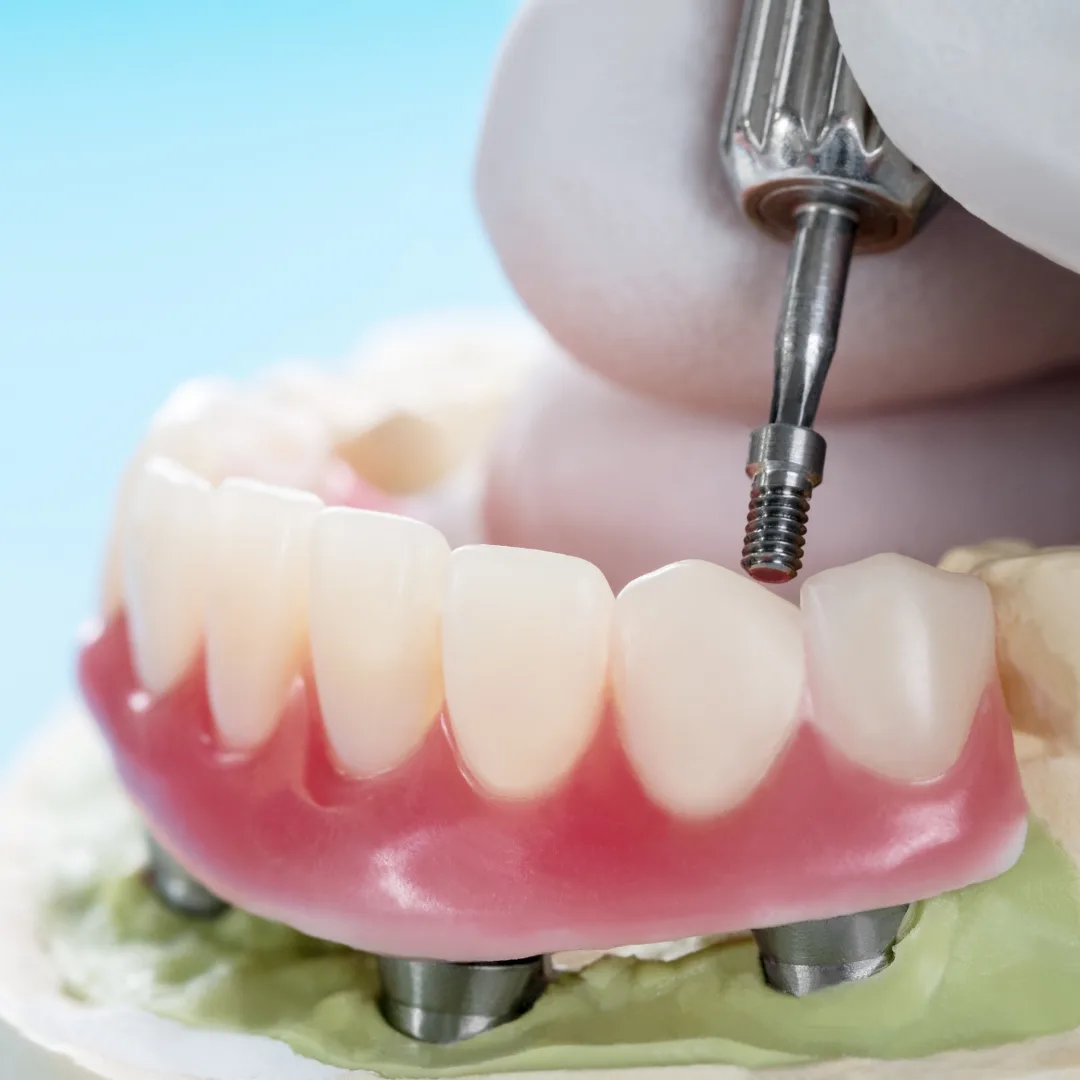
Choose Your Best Implant Solution
Thrive Dental offers comprehensive implant solutions for every scenario—from single missing teeth to complete full-arch restoration. Rather than a one-size-fits-all approach, we evaluate your specific situation and recommend the most efficient, durable, and cost-effective option.
Your choice depends on how many teeth you’re missing, your bone structure, your goals, and your budget. Let’s walk through each option so you understand what’s available.
Single Tooth Implants: The Premium Choice
Best for: One missing tooth in a location with adequate bone.
Process:
- CBCT imaging assesses bone at the site
- Implant surgical placement (30-45 minutes)
- Osseointegration (3-6 months) with Straumann implants
- Abutment placement (minor procedure)
- Crown fabrication and delivery
Timeline: 4-6 months total
Advantages:
- Preserves adjacent healthy teeth (no crown prep needed)
- Highest longevity among single tooth options
- Feels completely natural
- Prevents bone loss at that site
- One implant, one crown—straightforward treatment
Best choice if: You’re missing one tooth, have good bone, and want the premium option in longevity and comfort. We’ll provide a detailed cost estimate during your consultation.
Multiple Implants for Scattered Teeth
Best for: Several missing teeth in different areas (scattered).
Process: One implant is placed for each missing tooth (or occasionally a bridge spanning 2-3 teeth on implants). Each implant heals independently, then receives its crown.
Timeline: 4-6 months if all implants are placed simultaneously; longer if phased placement is needed
Advantages:
- Each tooth is independently replaced
- No dependence on adjacent teeth
- High predictability and longevity
- Each implant can be maintained independently
Best choice if: You’re missing several scattered teeth and have adequate bone at each site. This is a straightforward approach, and we’ll discuss costs during your consultation.
Implant-Supported Bridges: Efficient Multi-Tooth Replacement
Best for: Multiple missing teeth in a row (example: teeth #7, #8, #9 missing in a row).
Process: Instead of three implants for three missing teeth, place two implants (one on each end) and connect them with a bridge unit. Less surgery, fewer implants, same stability.
Advantages:
- Fewer implants than individual replacements
- Lower cost than individual implants
- Excellent stability and function
- Longevity comparable to individual implants
Best choice if: You’re missing 2-4 teeth in a row with good bone at each end. This is an efficient and cost-effective approach. Contact us for a personalized estimate.
All-on-4: Four Implants, Entire Arch
Best for: Complete or near-complete tooth loss in one arch.
Process: Four Straumann implants (two vertical anterior, two tilted posterior) surgically placed in one jaw. Temporary teeth attached same day. Permanent restoration after osseointegration.
Timeline: 4-6 months
Advantages:
- Complete arch restoration with just four implants
- Often no bone grafting needed (70-80% of patients)
- Same-day temporary teeth function immediately
- Fixed restoration (doesn’t come out)
- Prevents bone loss and facial collapse
- Cost-effective per tooth replaced
Best choice if: You’re missing all or most teeth in one or both jaws. This is the most efficient full-arch solution for most patients. We’ll provide a detailed cost estimate during your consultation.
(See our dedicated All-on-4 page for complete details.)
All-on-6: Maximum Implant Support
Best for: Complete tooth loss with excellent bone structure; patients who want maximum support.
Process: Six Straumann implants (four tilted posterior, two vertical anterior) support a fixed full-arch restoration. Provides maximum load distribution and stability.
Timeline: 4-6 months (same as All-on-4)
Advantages:
- Maximum implant support for heaviest chewers
- Slightly more longevity data than All-on-4 (marginal)
- Excellent stability
- Ideal if bone is exceptional
Disadvantage: Marginal functional improvement over All-on-4 in most cases; higher cost than All-on-4.
Best choice if: You have excellent bone, want absolute maximum stability, and can afford the premium cost.
Implant-Supported Dentures: Removable Hybrid
Best for: Complete tooth loss; patients who want stability of implants plus easy removal for cleaning.
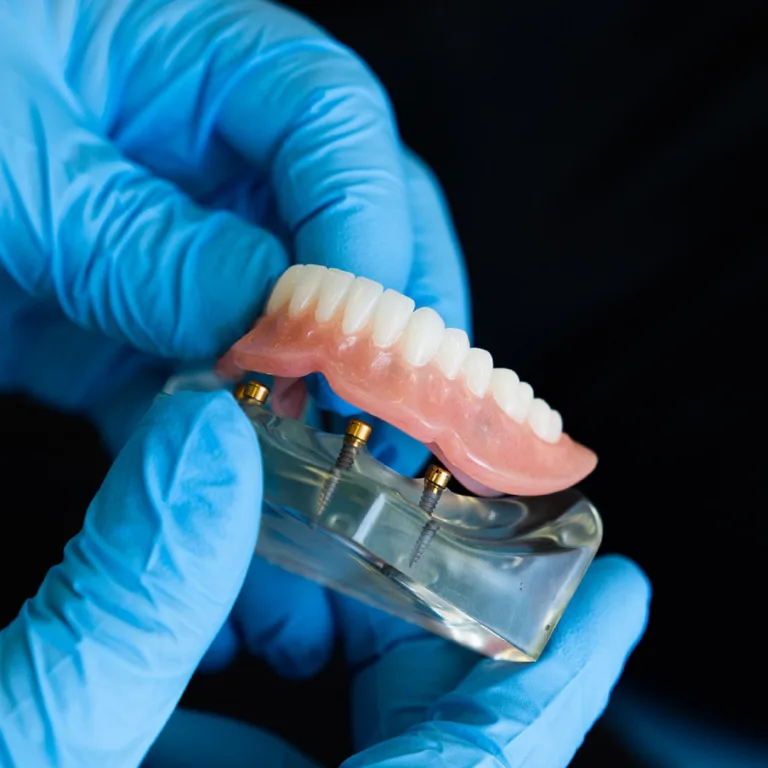
Process: Two to four implants are surgically placed. After osseointegration, a denture base is modified with clips or screws that attach to the implants. Denture remains removable but clips securely to implants, providing superior stability compared to conventional dentures.
Timeline: 5-7 months (surgery + osseointegration + denture fabrication)
Advantages:
- More stable than conventional dentures (doesn’t move)
- More affordable than All-on-4
- Denture is removable for easy cleaning
- Prevents most of the bone loss associated with conventional dentures
- Intermediate option between dentures and All-on-4
Disadvantages:
- Must be removed daily (unlike All-on-4)
- More expensive than conventional dentures
- Slightly less retention than All-on-4
Best choice if: You want implant benefits but prefer denture removability, or you have bone loss preventing All-on-4. This is an excellent middle-ground solution. Contact us for a personalized cost estimate.
Bone Grafting: When It’s Needed and What to Expect
If you’ve been missing teeth for years, bone resorbs significantly—especially in the back jaw (posterior). All-on-4’s tilted design often eliminates the need for grafting, but in some cases, bone building is necessary.
When bone grafting is needed:
- Severe posterior bone loss (height <5mm)
- Insufficient bone width for implant placement
- Prior implant failure requiring new site preparation
The bone grafting process:
- Surgical placement of bone graft (from your jaw, or synthetic/donor bone)
- Healing and integration (3-4 months)
- Follow-up CBCT imaging to confirm bone integration
- Implant placement in the grafted area
Timeline extension: Add 3-4 months to total treatment
The cost depends on graft size and material. We’ll provide a detailed estimate during your consultation.
Zygoma Implants: For Extreme Bone Loss
In rare cases of extreme posterior bone loss (when the back jaw has resorbed so severely that standard implants won’t fit), zygoma implants may be considered. These are anchored to the cheekbone (zygoma) instead of the jaw. They’re advanced procedures requiring precise surgical technique, but allow full-arch restoration in cases that would otherwise require extensive bone grafting.
This is a specialized procedure. We’ll discuss costs and candidacy during your consultation.
Best choice if: You have severe bone loss and want to avoid bone grafting or have failed bone grafting. Rare necessity.
Treatment Planning: How We Choose Your Best Option
Step 1: CBCT Imaging We assess bone quantity (height and width) at each potential implant location.
Step 2: Medical Evaluation We review your health, medications, and any conditions affecting bone healing.
Step 3: Discussion We discuss your goals—function, aesthetics, budget, willingness for surgery.
Step 4: Recommendation Based on bone structure and goals, we recommend the most efficient option. For example:
- Single tooth missing, good bone → Single implant
- All upper teeth missing, good bone → All-on-4
- All upper teeth missing, poor bone → All-on-4 (if possible) or bone grafting + All-on-4
- Severe bone loss unwilling to graft → Implant-supported dentures or zygoma implants
Success Rates: What to Expect
Implant success rates (Straumann):
- 5-year survival: 98-99%
- 10-year survival: 95-97%
- 20-year survival: 90-95%
These rates are excellent and comparable across all implant types (single, All-on-4, All-on-6). Success depends on bone quality, surgical technique, osseointegration time, and home care.
Recovery and Aftercare
Immediate post-operative (Days 1-7):
- Soreness, swelling, bruising
- Pain medication, ice packs
- Soft diet
- Careful oral hygiene around surgical sites
Weeks 2-4:
- Pain resolves
- Swelling gradually improves
- Introduce firmer soft foods
- Return to light activities
Months 1-6 (Osseointegration):
- Silently healing; bone fusing to implants
- Continue normal oral hygiene
- Wear temporary restoration (if applicable)
- Attend follow-up appointments
- Avoid smoking and alcohol (impair healing)
After permanent restoration placement:
- Normal brushing, flossing, eating
- Professional cleanings every 6 months
- Annual imaging to monitor bone
- Long-term success depends on excellent home care
Long-Term Value of Implant Solutions
When choosing between tooth replacement options, it’s important to consider long-term value. Implant solutions offer superior longevity and durability compared to conventional dentures, which require frequent replacements and adjustments. While implant solutions require higher initial investment, their lasting durability typically makes them more economical over a lifetime.
We’ll discuss the total cost and long-term value of each option during your consultation. Our flexible financing programs work with Cherry, CareCredit, and Sunbit to make your treatment accessible.
Why Choose Thrive Dental for Implant Solutions
Our doctors focus on surgical implant placement and restoration planning. We use CBCT technology for precise surgical planning. We use Straumann implants. We provide comprehensive aftercare and monitor your long-term success.
Most importantly, we take time to understand your situation, discuss all options, and recommend what we genuinely believe is best for you—not always the most expensive option.
Ready to explore your implant options? Schedule a consultation. We’ll evaluate your bone structure, discuss all solutions, and help you make an informed decision about your smile and quality of life.
Additional Tooth Replacement Options
For patients who prefer removable solutions, explore traditional dentures or implant-supported dentures. For fixed restorations on natural teeth, crowns and bridges are available. Visit any of our five Northern California locations or schedule your consultation today.
Frequently Asked Questions
It depends on: 1) How many teeth you're missing, 2) Your bone structure (measured via CBCT), 3) Your aesthetic goals, and 4) Your budget. We evaluate all factors and typically recommend the most efficient, durable option. Single implants work for one or a few missing teeth. All-on-4 or All-on-6 work for full arch loss. Implant-supported dentures bridge the gap--more stable than dentures, less costly than All-on-4.
All-on-4 uses four tilted implants efficiently placed in available bone; works for 70-80% of patients. All-on-6 uses six implants (four tilted, two vertical) for maximum support; ideal if you have excellent bone and want maximum stability. All-on-6 costs more but offers marginal functional improvement for most patients. We recommend All-on-4 unless your bone structure clearly indicates otherwise.
Implant-supported dentures: 2-4 implants with a removable denture that clips to them. Superior to conventional dentures, lower cost than All-on-4, easy to clean, removable. All-on-4: four implants with a fixed (non-removable) restoration. Maximum stability, no removal needed, most permanent feeling, higher cost. Both last 20+ years if maintained.
Yes. Options depend on severity: 1) Moderate loss: All-on-4 often works without grafting. 2) Severe loss: bone grafting may precede implants, adding 3-4 months. 3) Extreme loss: specialized implants (zygoma, tilted techniques) may be considered. Few people are absolutely unable to get implants--we'll find a solution.
If you've been missing teeth for years, significant bone resorption occurs. Bone grafting rebuilds height and width. We take bone from another area of your jaw, or use synthetic/donor bone, and place it where needed. It's a surgical procedure, minor in scope. After 3-4 months of healing and integration, implants can be placed. This extends total treatment by 3-4 months but enables implants in cases that would otherwise be impossible.
Vertical implants are perpendicular to your jaw; tilted implants angle 30-45 degrees toward the front. In All-on-4, tilting the posterior implants allows them to engage denser bone deeper in the jaw, avoiding the need for grafting and distributing bite forces optimally. Tilted implants are as strong and as long-lasting as vertical ones--decades of clinical evidence supports this.
Absolutely. You can have implants (single or full arch) in your upper jaw, lower jaw, or both. Doing both simultaneously is possible but means extended healing before you can chew normally. Most commonly, we do upper first (6-month healing), then lower (6 more months), allowing you better nutrition during each recovery period.
Day 1 (Surgery): Local anesthesia, 30 minutes to 2 hours depending on case complexity. Days 2-7: Mild to moderate soreness, peak swelling day 2-3, managed with medication. Week 2-4: Pain resolves, can eat soft foods. Month 3-6: Osseointegration occurs silently; you wear temporary teeth (All-on-4/dentures) or nothing (single implant). Permanent restoration placed month 3-6.
Implants themselves: 30-40+ years or lifetime with proper care. Crowns/bridges on single implants: 15-20 years, then replacement due to normal wear. All-on-4/All-on-6 prosthesis: 15-25 years. Implant-supported denture: 15-25 years. Most patients never need replacement; many need one replacement during their lifetime.
Implant failure is rare (1-5% depending on bone quality and patient health). If it occurs, we remove it, allow the bone to heal (3-4 months), and place a new implant. We don't charge for implant replacement if failure is our responsibility (improper placement). If failure is due to insufficient healing time or poor home care, replacement cost is discussed upfront.
Related Services
All-on-4 Implants
Replace an entire arch with just four implants. All-on-4 offers permanent teeth in one day with significant functional advantages over dentures.
Dental Implants
Straumann dental implants offer permanent tooth replacement with high clinical success rates--the closest restoration to natural teeth.
Get Implant and All-Arch Solutions Near You
Ready for Implant and All-Arch Solutions?
Schedule your appointment at any of our five Northern California locations. Our team is here to help you achieve the smile you deserve.