
Custom Dentures
Modern custom dentures restore function and appearance when teeth are lost. Full and partial options available--plus implant-supported upgrades.
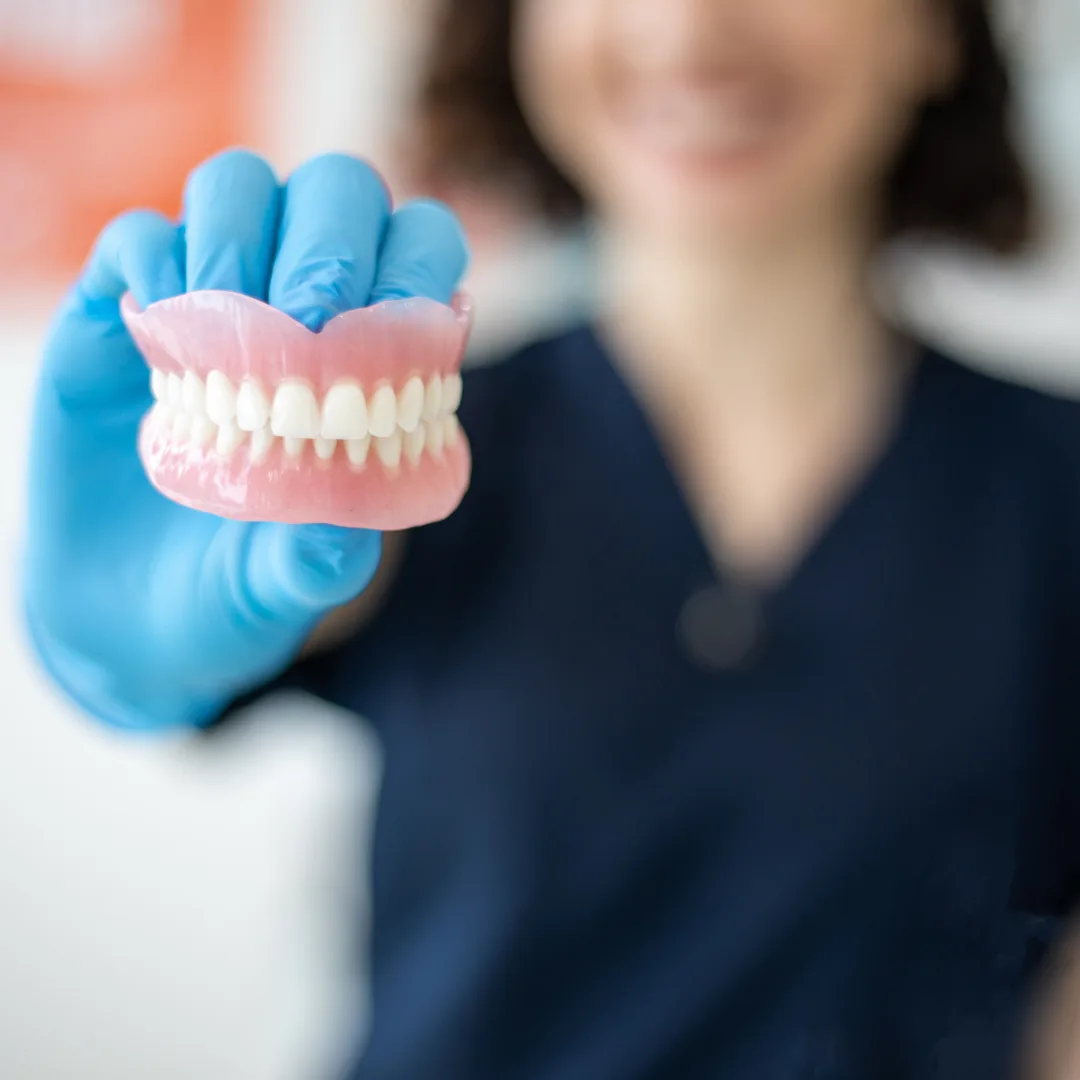
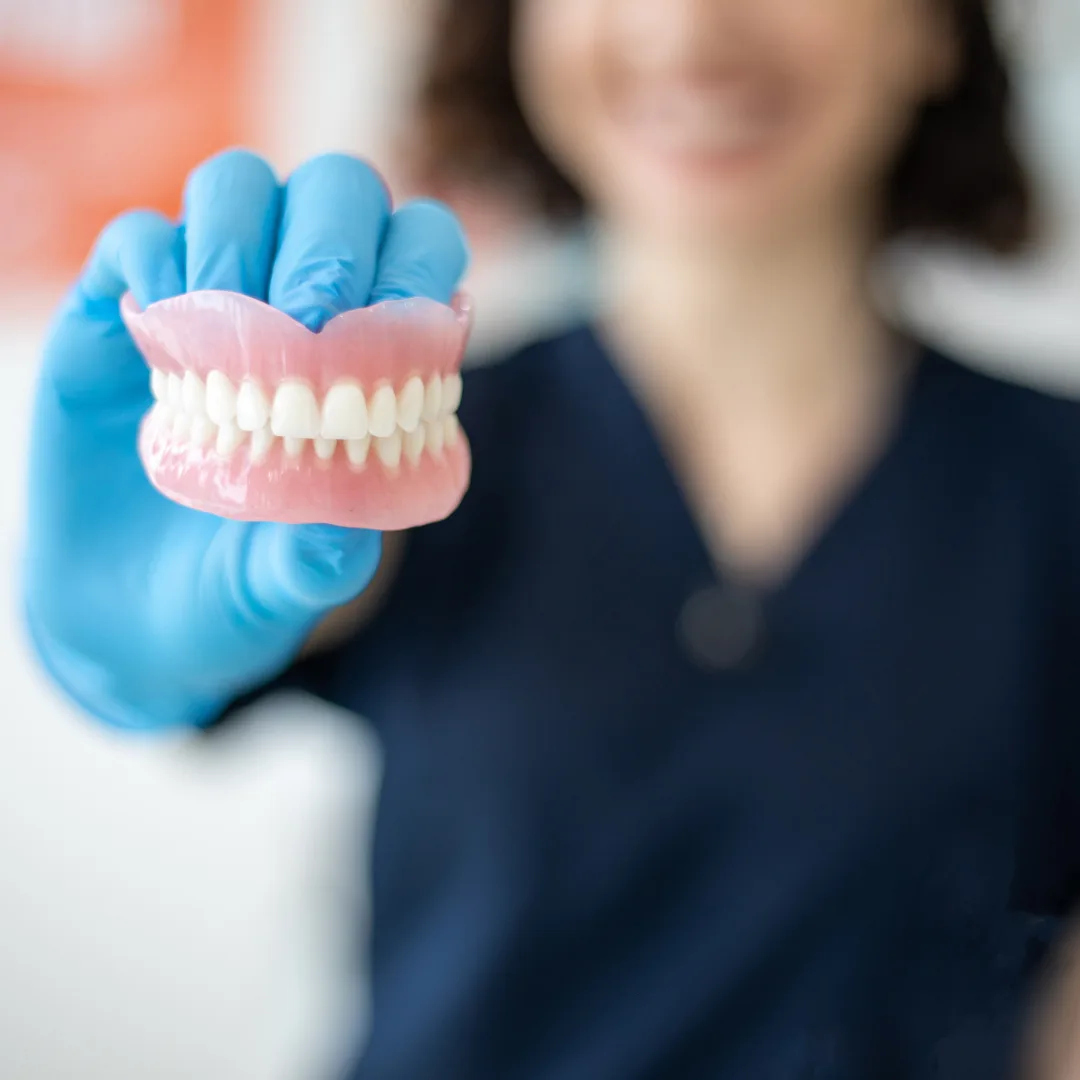
Restore Your Smile When Natural Teeth Are Lost
When you’ve lost most or all of your natural teeth due to decay, disease, or injury, custom dentures can restore your ability to eat comfortably, speak clearly, and smile confidently. Modern dentures are far more natural-looking and comfortable than older generations, and today’s materials and construction techniques deliver superior durability.
At Thrive Dental, we craft each denture carefully to match your facial features, skin tone, and natural tooth color. Whether you need a complete denture to replace all your teeth or a partial denture to close gaps left by missing teeth, we’ll create a restoration that looks natural and functions well for your lifestyle.
Types of Dentures: Finding Your Best Option
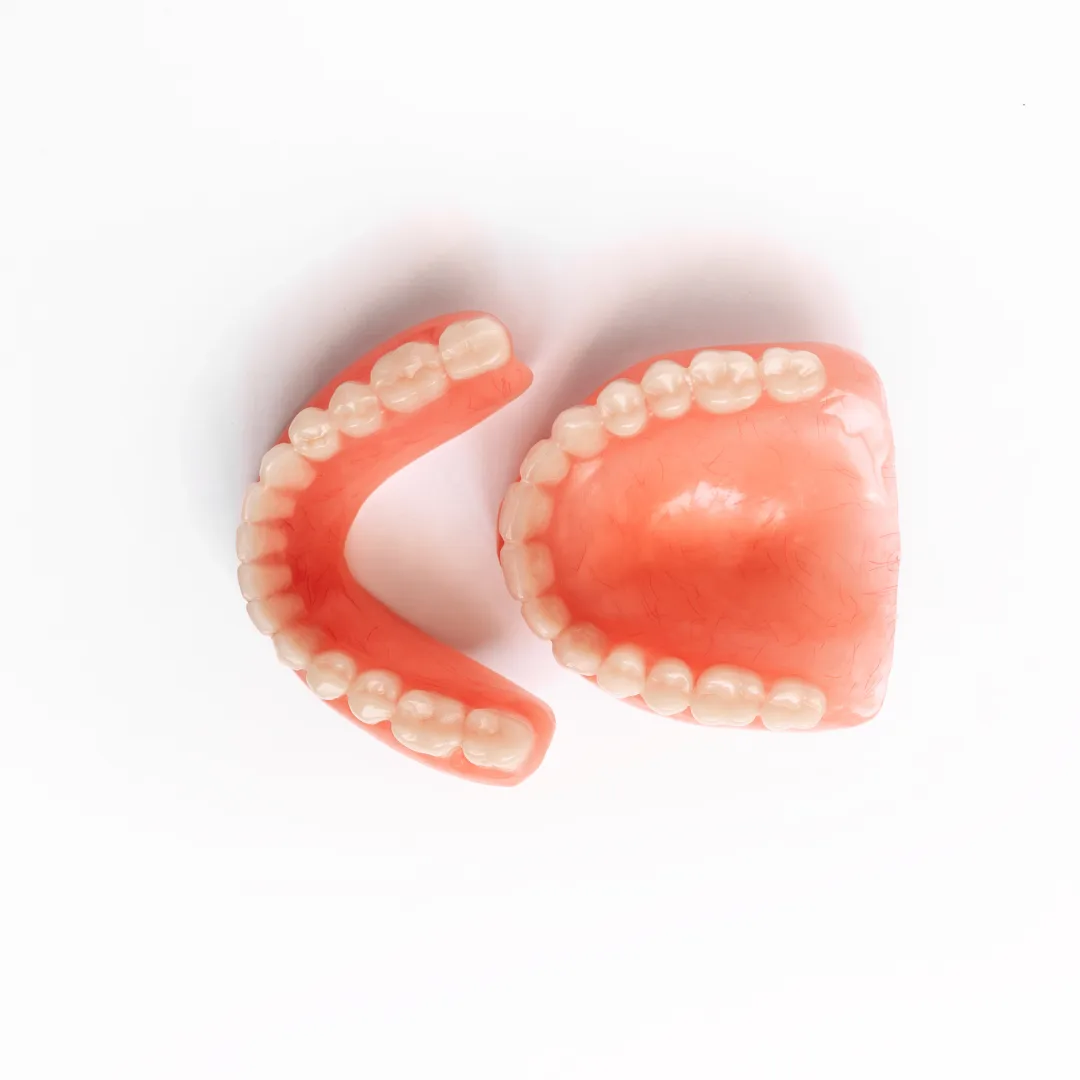
Complete (Full) Dentures Replace all teeth in one arch (upper or lower). Supported entirely by the gums and underlying bone, not by any remaining teeth. Provides a complete smile restoration.
Partial Dentures Replace one or more missing teeth while preserving healthy remaining teeth. Clasp onto remaining teeth for stability and use your residual bone for support. Allows you to keep natural teeth whenever possible.
Immediate Dentures Fabricated before tooth extraction and placed on extraction day. Advantage: you leave with teeth, avoiding an edentulous period. Disadvantage: requires multiple adjustments (2-3) as gums heal and reshape over 8-12 weeks.
Conventional Dentures Fabricated after extraction and healing is complete (8-12 weeks). Advantage: fits perfectly from delivery because your gums have fully reshaped. Disadvantage: you’re without teeth during the healing period (unless you wear a temporary).
Implant-Supported Dentures Anchor to two or more dental implants instead of resting on gums alone. Provides superior stability, comfort, and function. Lasts 15-25 years (vs. 5-8 for conventional). Prevents bone loss. Discussed in detail below.
The Denture Fabrication Process
Step 1: Initial Consultation & Assessment We examine your mouth, assess remaining teeth, evaluate bone structure, and discuss your needs and expectations. We review types of dentures and help you choose the best option for your situation.
Step 2: Impressions We take detailed impressions of your upper and lower arches using impression materials. These capture every contour of your bone and gums, essential for proper fit and retention.
Step 3: Bite Registration We determine your correct bite relationship (how your upper and lower teeth meet). This ensures proper tooth positioning and bite alignment in your finished denture.
Step 4: Shade & Mold Selection We select artificial teeth and gum color to match your natural tooth appearance and skin tone. We discuss tooth size, shape, and spacing with you, ensuring the final result looks natural.
Step 5: Try-In Appointment The denture is partially fabricated and ready for evaluation. We place it in your mouth, verify fit, check bite alignment, and assess appearance. If adjustments are needed (different tooth shape, shade, or positioning), we send it back to the lab.
Step 6: Final Fabrication & Delivery Once approved at the try-in, the denture is finalized in the laboratory. At delivery, we verify perfect fit, clean any rough edges, provide detailed care instructions, and schedule a follow-up adjustment appointment.
Step 7: Follow-Up Adjustments Some soreness at delivery is normal. You’ll likely need 1-2 adjustments in the first week or two as your mouth adapts and any pressure spots are relieved. We make these adjustments at no charge.
Implant-Supported Dentures: Enhanced Comfort and Function
If you have adequate bone and want a denture that won’t move, implant-supported dentures are a game-changer. Two to four small implants are placed in your jawbone, and your denture clips or screws to these implants.
Advantages:
- Stability: Denture doesn’t shift when you chew or speak, unlike conventional dentures
- Comfort: No bulky palate coverage needed for retention; clips attach to implants instead
- Retention: You have full chewing power and can eat nearly normally
- Longevity: Lasts 15-25 years vs. 5-8 for conventional dentures
- Bone preservation: Implants stimulate bone, preventing the bone loss that accelerates with conventional dentures
- Removable: Easy to remove for cleaning (less burdensome than All-on-4)
How it works: Two implants (lower jaw) to four implants (upper jaw or both arches) are surgically placed. After osseointegration (3-6 months), your denture base is modified with small clip or screw attachments. Your finished denture clips securely to the implants, remaining stable during function but removable for cleaning.
Implant-supported dentures cost more than conventional dentures initially but offer greater longevity and benefits. We’ll provide a detailed estimate during your consultation.
This is an excellent middle ground between conventional dentures and All-on-4 implants.
Materials and Construction
Modern dentures use:
- Acrylic resin base: Lightweight, comfortable, durable, and can be adjusted or repaired easily
- Artificial teeth: Made of acrylic or porcelain-like materials, custom-shaded to match your natural tooth color
- Clasps (for partials): Metal or acrylic structures that grip remaining teeth, usually hidden from view
All materials are biocompatible and proven safe for oral use.
Denture Lifespan and Maintenance
Expected lifespan: 5-8 years with proper care. Some last longer; some wear faster depending on use and maintenance.
Why replacement is eventually needed: Conventional dentures rest on your gums and jawbone. Over time, bone resorbs (shrinks) beneath the denture because dentures do not prevent the natural bone resorption that occurs after tooth loss. After 5-8 years, significant resorption makes your denture loose, causing fit problems and sore spots.
Extending denture life:
- Relines: A dentist adds material to the inside of your denture base to compensate for bone resorption, tightening the fit. Most dentures need a reline every 2-3 years. Tissue relines are temporary; lab relines are permanent and more durable.
- Excellent care: Proper cleaning and handling minimize damage and extend useful life
- Professional adjustment: Have loose areas, cracks, or worn teeth addressed promptly
Daily Denture Care
Cleaning:
- Brush gently with a soft denture brush (not a toothbrush)
- Use denture cleanser tablets or paste (NOT regular toothpaste—too abrasive)
- Soak overnight in denture cleansing solution
- Rinse before wearing
Handling:
- Handle over a towel or sink to avoid dropping (dentures break easily)
- Don’t bend clasps when inserting (gradual stress causes breakage)
- Avoid dropping into hard surfaces
Storage & Rest:
- Remove and soak overnight in denture solution (let your gums rest)
- Don’t sleep in conventional dentures unless recommended
- Keep away from heat (dishwasher, boiling water warps acrylic)
- Keep away from pets and children
Professional care:
- Have them checked and cleaned annually
- Address any loose areas, cracks, or worn teeth promptly
- Relines performed every 2-3 years
Eating with Dentures: Adjustment Period
First week:
- Soft foods (yogurt, mashed potatoes, smoothies)
- Small bites
- Chew slowly and deliberately
- You’ll notice the denture in your mouth—this normalizes
Weeks 2-4:
- Introduce firmer soft foods (cooked vegetables, fish, chicken)
- Gradually increase chewing force
- Practice speaking; bite your cheeks less often
- Most patients feel confident within 2-3 weeks
After one month:
- Nearly any food is possible
- You’ll have found your comfort zone
- Avoid very sticky (gum, candy), very hard (nuts, hard candy), or very hot foods until fully adapted
Implant-supported dentures: You regain significantly more chewing power and can eat more varied foods, though you’re still limited to foods you can’t hold with your teeth (e.g., corn on the cob is still challenging).
Speech Adjustment
Some patients notice temporary changes in speech immediately after getting dentures. Your mouth will feel different, and your tongue may hit the denture when speaking. This normalizes within days to weeks as your brain adapts and you learn to position your tongue around the denture. Reading aloud helps accelerate adaptation.
Cost and Financing Options
We work with Cherry, CareCredit, and Sunbit to offer flexible financing options that make dentures affordable for everyone. Some dental insurance plans cover a percentage of denture costs; we’ll verify your benefits. Contact us for a personalized estimate during your consultation.
Why Choose Thrive Dental for Your Dentures
We understand that losing your natural teeth affects more than your smile—it impacts your ability to eat the foods you love, your confidence in social situations, and your quality of life. Our approach prioritizes dignity and function. We discuss all options honestly—conventional dentures, implant-supported dentures, and All-on-4—and recommend what’s truly best for your situation, not what generates the most revenue. We support you through the adjustment period, celebrate your successes, and ensure your dentures return you to eating, speaking, and smiling with confidence.
We also emphasize that dentures are not a life sentence to declining quality of life. Modern materials are excellent, implant-supported options prevent bone loss, and our careful follow-up ensures your dentures remain functional and comfortable for years.
Ready to explore denture options? Schedule a consultation today. We’ll examine your situation, discuss all possibilities, and help you make the best decision for your smile and quality of life.
Consider All Restoration Options
If dentures aren’t your ideal solution, explore All-on-4 implants for permanent full-arch restoration, implant-supported dentures for superior stability, or individual dental implants for single tooth replacement. All options have advantages and costs. Visit any of our five Northern California locations or schedule your consultation to discuss which solution is right for you.

Frequently Asked Questions
Complete dentures replace all teeth in one arch (upper or lower). Partial dentures replace several missing teeth and clasp to remaining natural teeth. Both come in two variants: conventional (placed after healing) and immediate (placed at extraction, then adjusted). Implant-supported dentures anchor to implants instead of gums or remaining teeth, offering superior stability and comfort.
Conventional dentures take 4-6 weeks. Process: impressions, bite registration, try-in for approval, lab fabrication, and delivery. Immediate dentures are placed at extraction but require multiple adjustments (2-3 weeks) as gums heal and reshape. Implant-supported dentures require implant healing (3-6 months) before denture placement.
Modern dentures are very natural-feeling with proper fit and adjustment. There's an adjustment period (1-3 weeks) as your mouth adapts to the new feel and learns to stabilize the dentures while chewing and speaking. Most patients adapt quickly. Some notice reduced taste initially (the roof of the mouth is covered), but this usually improves as the brain adjusts.
Well-made dentures typically last 5-8 years before requiring replacement. Your jawbone reshapes over time as you wear dentures (bone resorption occurs naturally after tooth loss), causing them to fit loosely. Relines (material added to the base to restore fit) extend life but eventually new dentures are needed. Implant-supported dentures last 15-25 years.
Yes. Implant-supported dentures use two or more implants to anchor a denture, providing superior stability compared to conventional dentures. You get the easy removal for cleaning plus the stability of implants. They're more expensive but last much longer and prevent bone loss. This is an excellent compromise between conventional dentures and All-on-4.
Daily: brush gently with a soft denture brush (not a toothbrush), use denture cleanser (not toothpaste), and soak overnight in denture solution. Handle carefully to avoid drops (they're fragile). Don't sleep in them (let your gums rest) unless they're implant-supported. Have them checked yearly. Avoid hot water (it warps the acrylic) and stain-causing foods/drinks.
Looseness is normal as your jawbone reshapes. Contact us--we can perform a reline (adding material to tighten the fit). If your dentures cause sore spots, we'll adjust them. If you're unhappy with appearance or bite after adjustment, replacement dentures can be fabricated. Don't let loose or uncomfortable dentures persist; adjustments restore comfort quickly.
Nearly. You can eat most foods but start with soft foods and gradually progress to harder ones. Avoid very sticky foods (candy, gum), very hard foods (nuts, hard candy), and very hot foods until you adapt. You'll likely chew differently and more slowly. With implant-supported dentures, you regain nearly normal chewing ability and can eat almost anything.
Conventional dentures: fabricated after any extractions and complete healing (8-12 weeks), so they fit perfectly from the start. Immediate dentures: fabricated based on pre-extraction impressions and placed at extraction day, avoiding time without teeth but requiring 2-3 adjustments as gums reshape. Choose conventional for better fit, immediate if you can't be without teeth.
Related Services
All-on-4 Implants
Replace an entire arch with just four implants. All-on-4 offers permanent teeth in one day with significant functional advantages over dentures.
Dental Implants
Straumann dental implants offer permanent tooth replacement with high clinical success rates--the closest restoration to natural teeth.
Get Custom Dentures Near You
Ready for Custom Dentures?
Schedule your appointment at any of our five Northern California locations. Our team is here to help you achieve the smile you deserve.