
Professional Teeth Cleanings
Professional cleanings at Thrive Dental remove plaque and tartar that brushing alone cannot, preventing cavities and gum disease.

Why Regular Cleanings Are Essential
At Thrive Dental, we know that brushing and flossing at home are vital, but they cannot remove tartar. Plaque hardens into tartar within 24 hours, and once tartar forms, only professional instruments can remove it. Without regular cleanings, tartar accumulates below the gum line, causing inflammation, bleeding, and eventually periodontal disease and tooth loss. Prevention is always easier and less expensive than treatment.
The Five-Step Professional Cleaning Process
Assessment: Your hygienist examines your teeth and gums at Thrive Dental, checking for plaque, tartar, early decay, and signs of gum disease. We often use digital X-rays to detect problems below the surface.
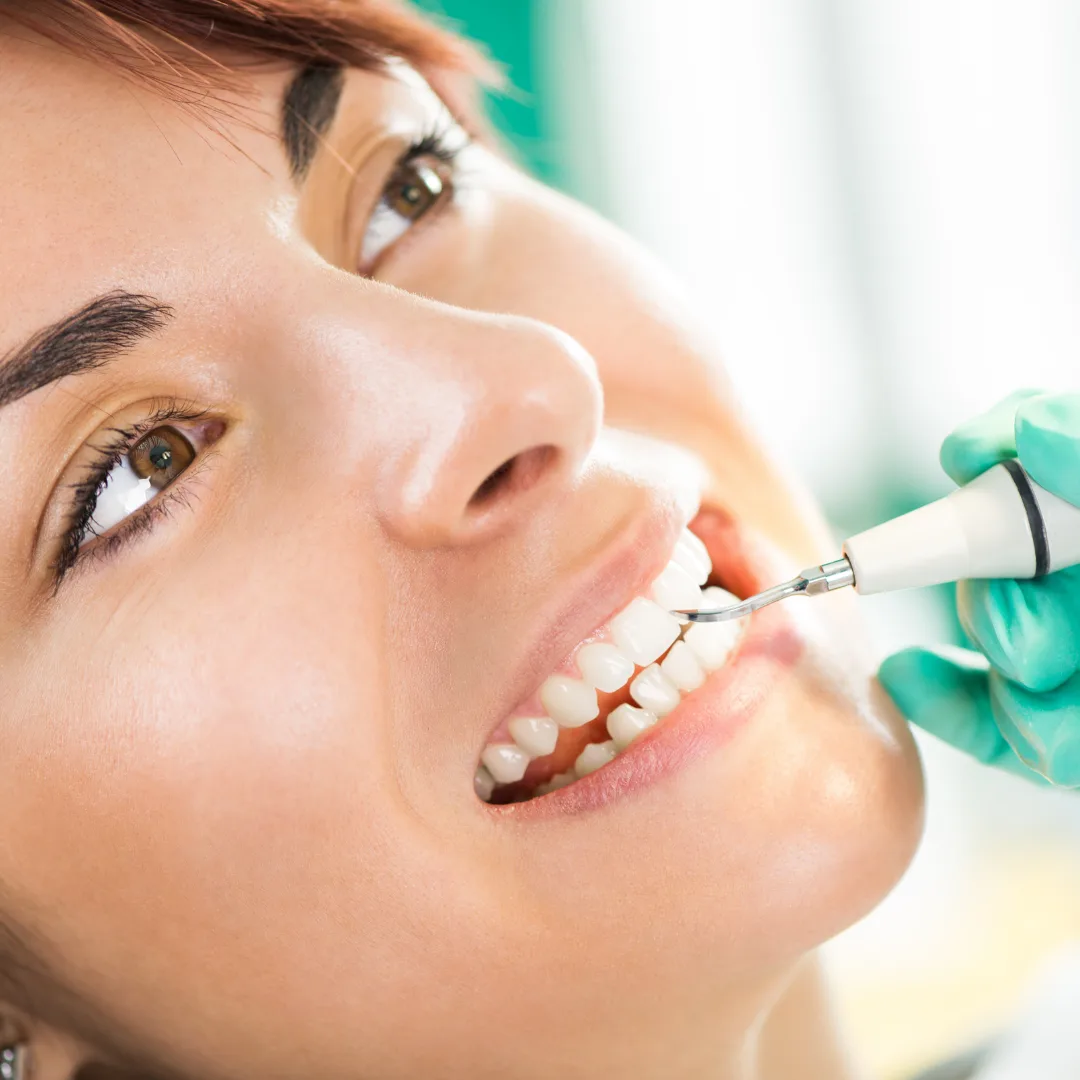
Ultrasonic Scaling: Using a vibrating ultrasonic scaler, we gently remove tartar and plaque from all tooth surfaces—above the gum line, at the water line, and just below it. The vibration breaks up hardened tartar without damaging your tooth enamel. You’ll hear a soft whirring sound and feel light pressure.
Hand Scaling: For areas the ultrasonic scaler cannot reach or if you prefer a quieter approach, our hygienist uses precise hand instruments to remove remaining tartar. This gives us complete control and feels very gentle.
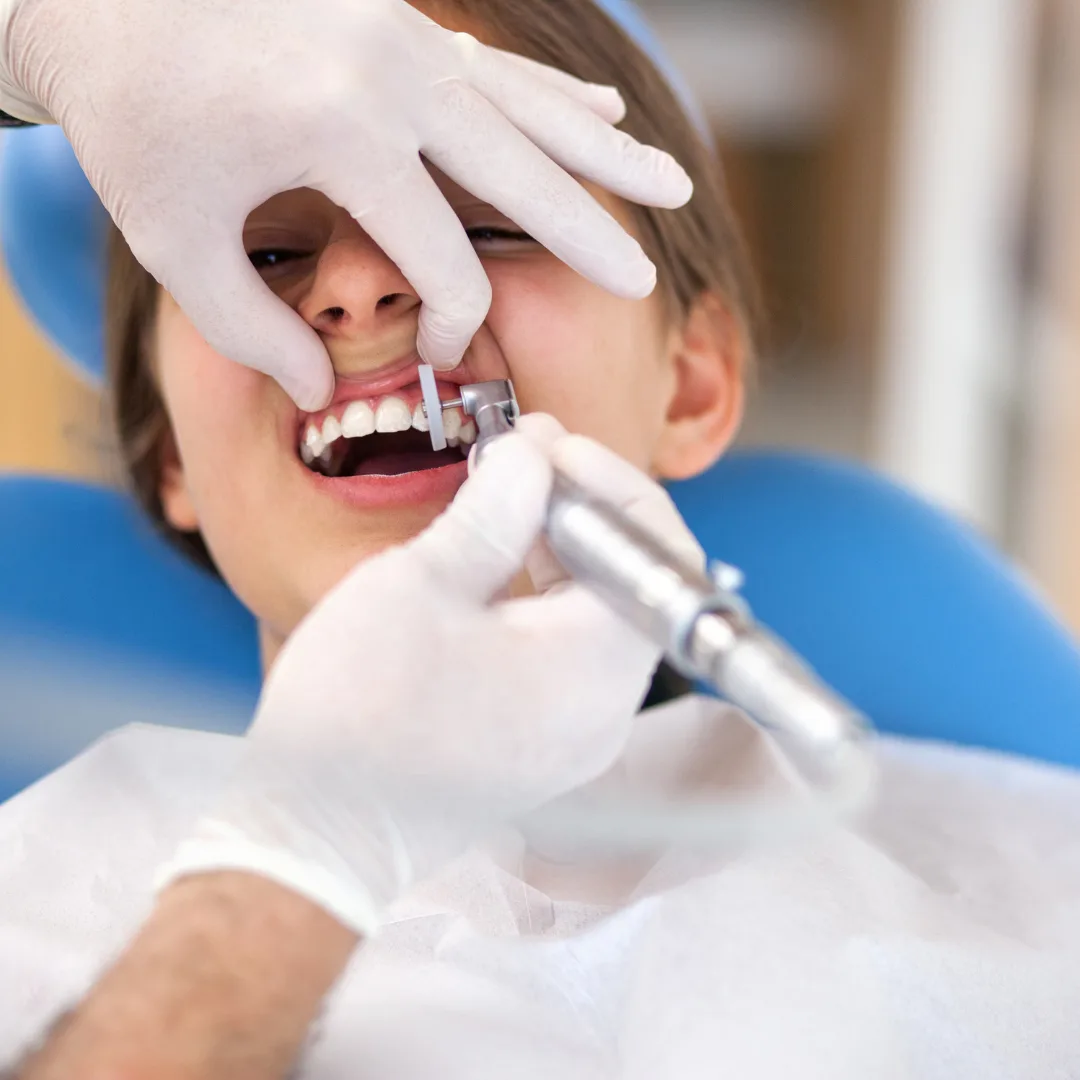
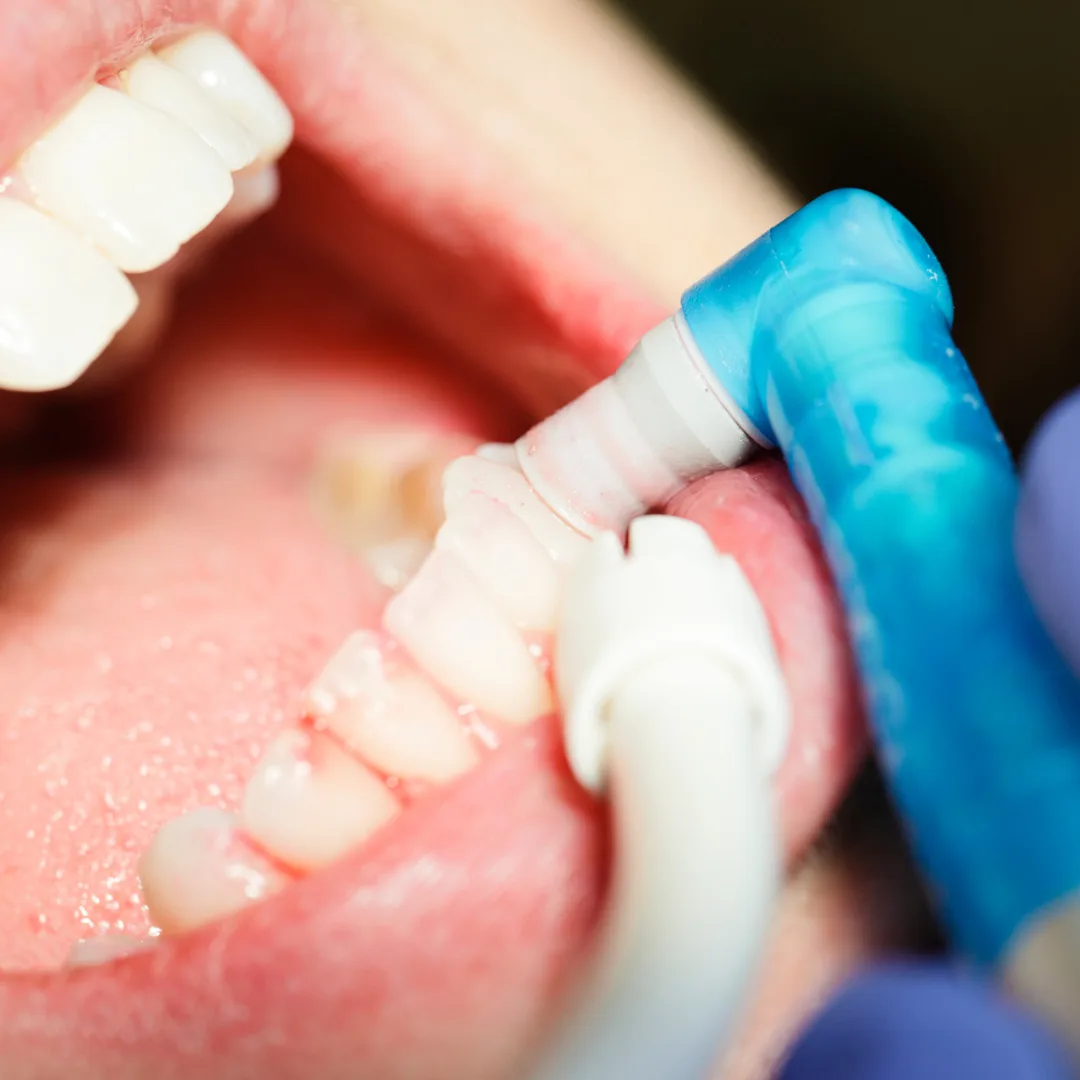
Polishing: We polish your teeth with a smooth, slightly gritty paste and a soft rubber cup. This removes surface stains from coffee, tea, wine, and tobacco—marks that brushing alone cannot lift—leaving your teeth smooth and bright.
Fluoride Application: A topical fluoride gel is applied for 60 seconds to strengthen enamel and reduce sensitivity. You’ll avoid eating or drinking for 30 minutes afterward so the fluoride can fully bond to your teeth.
What to Expect During Your Cleaning
A routine cleaning takes 45 minutes to one hour. You’ll recline in our comfortable chair under soft lighting at any of our five locations—Dixon, Elk Grove, Yuba City, Stockton, or Santa Clara. Our hygienists explain what they’re doing as they work, so nothing surprises you. If you need a break, just raise your hand—we pause anytime.
You may feel minor sensitivity if you haven’t had a cleaning recently or if gum disease is present. This is normal and temporary. The gentle pressure and light vibration you feel are signs we’re removing harmful buildup.
Gum Health and Disease Prevention
Tartar below the gum line is the primary cause of gum disease. When tartar accumulates, bacteria thrive, and your immune system reacts with inflammation. If left unchecked, inflammation spreads deeper, causing periodontal disease—bleeding gums, loose teeth, and eventually tooth loss.
Regular cleanings prevent this progression. By removing tartar at least every 6 months (or more frequently if you have gum disease risk), we interrupt the inflammation cycle and keep your gums healthy.
Patients with untreated gum disease often feel shock when learning they’re losing teeth. The good news: regular professional cleanings prevent this. Prevention is always easier and less expensive than treatment.
After Your Cleaning
Your mouth may feel tender or slightly sore for a day or two, especially if tartar buildup was significant or gum disease was present. This is normal and temporary—it’s simply your gums responding to removal of harmful buildup. The sensitivity fades quickly.
Post-cleaning care:
- Brush gently with a soft toothbrush for a few days
- Avoid hard or sticky foods for 24 hours
- Avoid alcohol and mouthwash for 48 hours (can irritate freshly cleaned gums)
- Continue brushing twice daily and flossing daily—don’t let buildup return
Between Cleanings: Your Daily Care Routine
Professional cleanings are critical, but they’re only half the equation. Your daily home care is equally important.
Proper brushing:
- Brush twice daily for 2 minutes (most people brush only 30-45 seconds)
- Use a soft or medium toothbrush
- Hold the brush at a 45-degree angle toward the gum line
- Use small circular motions on each tooth surface
- Don’t scrub hard—gentle, thorough brushing is better than aggressive
Floss daily:
- Daily flossing removes plaque between teeth (where brushing cannot reach)
- Traditional string floss, water flossers, or soft picks all work
- Floss every tooth, including behind the back teeth
- If flossing causes bleeding, floss more frequently—your gums will toughen
Consider other tools:
- Electric toothbrushes are more effective for many patients
- Waterpiks help if you have gaps or difficulty flossing
- Interdental brushes reach between teeth effectively
Limit dietary risks:
- Frequent snacking feeds cavity-causing bacteria all day
- Acidic beverages (soda, energy drinks, citrus) weaken enamel
- Sticky candies and dried fruit cling to teeth
Why Some Patients Need More Frequent Cleanings
Most patients benefit from cleanings every 6 months (twice yearly). However, some need cleanings every 3-4 months. Risk factors include:
Gum disease history: Patients with past or current gum disease need more frequent cleanings to prevent recurrence.
Heavy tartar buildup: Some people have faster tartar formation due to genetics or saliva chemistry. More frequent cleanings prevent buildup.
Diabetes: Diabetes increases gum disease risk and requires more frequent care.
Smoking: Smokers have higher gum disease risk and should have cleanings 3-4 months apart.
Immunosuppression: Patients with compromised immune systems need more support.
Poor home care: If you struggle with daily brushing and flossing, more frequent cleanings help manage buildup.
Dr. Sekhon will assess your individual situation and recommend the frequency that’s right for you. More frequent cleanings may cost more initially, but prevent far more expensive treatment down the road.
The Investment in Prevention
Regular professional cleanings may seem like an added expense, but they’re one of the smartest investments you can make in your oral health. Each cleaning costs less than a single filling. By preventing cavities, gum disease, and tooth loss through regular cleanings, you avoid treatments that cost hundreds or thousands of dollars.
Think of professional cleanings as health maintenance, not just cosmetic care. They keep you healthy, keep your teeth, and keep your smile.
Your Cleaning Schedule at Thrive Dental
At Thrive Dental’s five Northern California locations—Dixon, Elk Grove, Yuba City, Stockton, and Santa Clara—we make regular cleanings convenient. Our hygienists are friendly and thorough, our chairs are comfortable, and we understand that dental anxiety is real. If you’re nervous about cleanings, tell us—we’ll explain everything and go at a pace that’s comfortable for you.
Ready to schedule your cleaning or establish regular cleaning appointments? Book at www.zocdoc.com/practice/thrive-dental-140962 or call your nearest Thrive Dental location. Your healthiest smile starts with regular cleanings.
Related General Dentistry Services
Learn more about other preventive and restorative treatments: Digital X-rays help us detect hidden decay, fluoride treatment strengthens enamel, and oral cancer screening protects your health. Visit us at any of our five Northern California locations or schedule online.
Frequently Asked Questions
Most patients benefit from professional cleanings twice yearly. At Thrive Dental, we assess your individual risk factors--gum health, tartar buildup, medical history--and may recommend three cleanings per year if you're prone to periodontal disease or have risk factors like diabetes.
Professional cleanings are typically painless and gentle. Our hygienists at Thrive Dental use ultrasonic scalers and hand instruments with a careful touch. If you have sensitive teeth, we can numb the area first or adjust our technique to keep you completely comfortable.
A standard cleaning removes plaque and tartar above the gum line. A deep cleaning (scaling and root planing) targets buildup below the gum line to treat periodontal disease. Thrive Dental evaluates your gums at each visit and recommends deep cleaning only if gum disease is present.
Yes, you can eat and drink normally after your cleaning at Thrive Dental. If we applied fluoride, avoid eating or drinking for 30 minutes to let it set. If your teeth feel sensitive, avoid very hot foods for a few hours.
Thrive Dental uses modern ultrasonic scalers and hand instruments to remove tartar. We apply a fluoride gel to strengthen enamel. All instruments are sterilized according to strict infection control standards.
Related Services
Digital X-Rays
Digital X-rays at Thrive Dental provide precise diagnostic imaging with 80% less radiation than traditional film X-rays.
Dental Fillings
Tooth-colored composite fillings at Thrive Dental restore cavities with natural-looking results that blend seamlessly with your teeth.
Oral Cancer Screening
Oral cancer screening at Thrive Dental is a simple, crucial part of preventive care that detects cancer early when survival rates are highest.
Get Professional Teeth Cleanings Near You
Ready for Professional Teeth Cleanings?
Schedule your appointment at any of our five Northern California locations. Our team is here to help you achieve the smile you deserve.