
Digital X-Rays
Digital X-rays at Thrive Dental provide precise diagnostic imaging with 80% less radiation than traditional film X-rays.
Why Digital X-Rays Are Essential to Your Care
Digital X-rays are the eyes that let our Thrive Dental dentists see what cannot be seen with visual examination alone. About 30% of cavities develop between teeth, hidden from view. Gum disease advances silently beneath the gum line. Infections brew under crowns without obvious symptoms. X-rays catch these problems early, when treatment is simpler and less expensive.
At Thrive Dental, we use modern digital X-ray technology with advanced safety features to provide precise diagnosis with minimal radiation exposure.
The Shift from Film to Digital X-Rays
Traditional film X-rays require chemical processing and take 20-30 minutes to develop. Digital X-rays are captured instantly on an electronic sensor and appear on a computer screen immediately. We can zoom in, adjust contrast and brightness, and measure tooth structures with pixel precision.
Radiation Comparison: Digital X-rays use up to 90% less radiation compared to traditional film X-rays, according to the American Dental Association. Specifically:
- Traditional film X-ray: 0.15 millisieverts (mSv) per image
- Digital X-ray: up to 0.03 mSv per image (90% reduction according to ADA standards)
- Full mouth digital series: 0.1-0.2 mSv total
For perspective, your annual background radiation exposure (from natural sources) is about 3 mSv. A cross-country flight exposes you to 0.04 mSv. Dental X-rays are one of the lowest-risk imaging procedures.
Types of Digital X-Rays We Use
Bitewings: Small X-rays showing the crowns of teeth and the bone between them. Bitewings detect cavities between teeth and reveal bone loss from gum disease. We typically take 4 bitewings (one for each side of the mouth, upper and lower).
Periapical X-rays: Full-tooth X-rays showing the crown, root, and surrounding bone. These detect root infections, implant position, and bone loss around tooth roots. New patients typically receive a full series of 14-20 periapical X-rays.
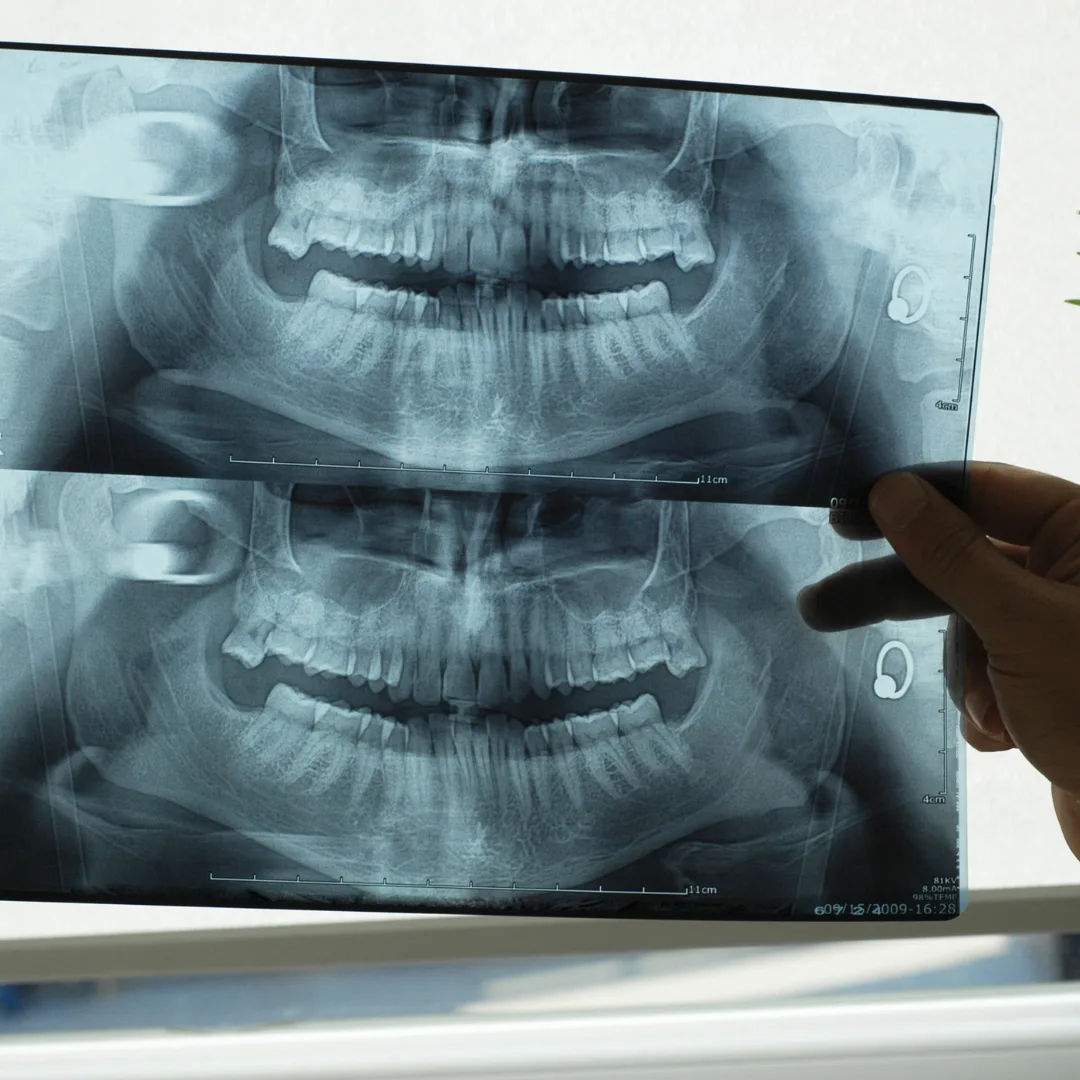
Panoramic X-rays: A single image showing all teeth, the entire jaw, and the TMJ. Panoramic X-rays reveal wisdom tooth position, jaw fractures, cysts, and large lesions. New patients and those with wisdom tooth concerns get panoramic X-rays.
Cone Beam CT (CBCT): 3D imaging for complex cases—implant planning, severe bone loss, jaw surgery, impacted teeth. CBCT provides detailed 3D reconstruction with high precision but uses more radiation than 2D X-rays, so we reserve it for cases where the benefit justifies the exposure.
The Digital X-Ray Process
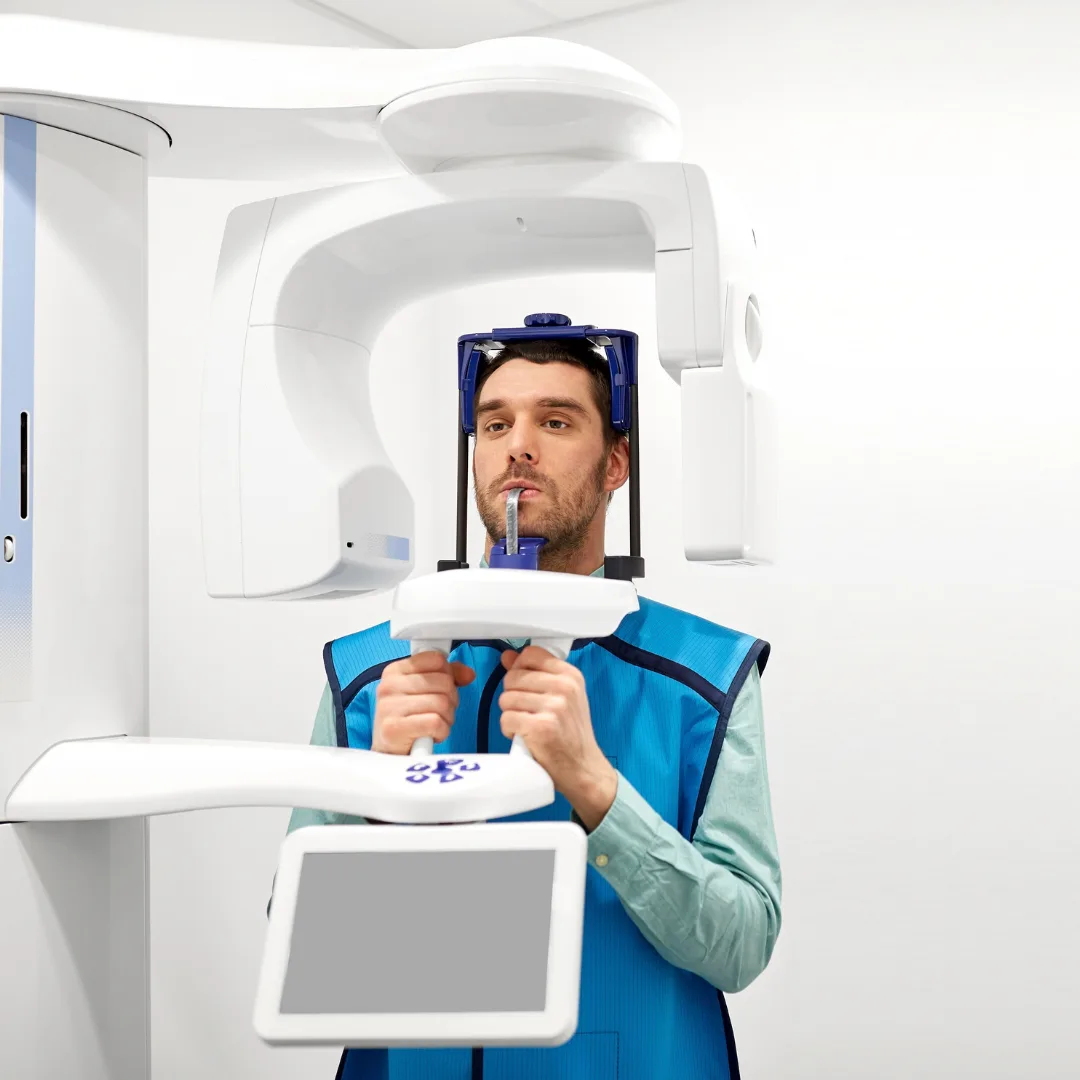
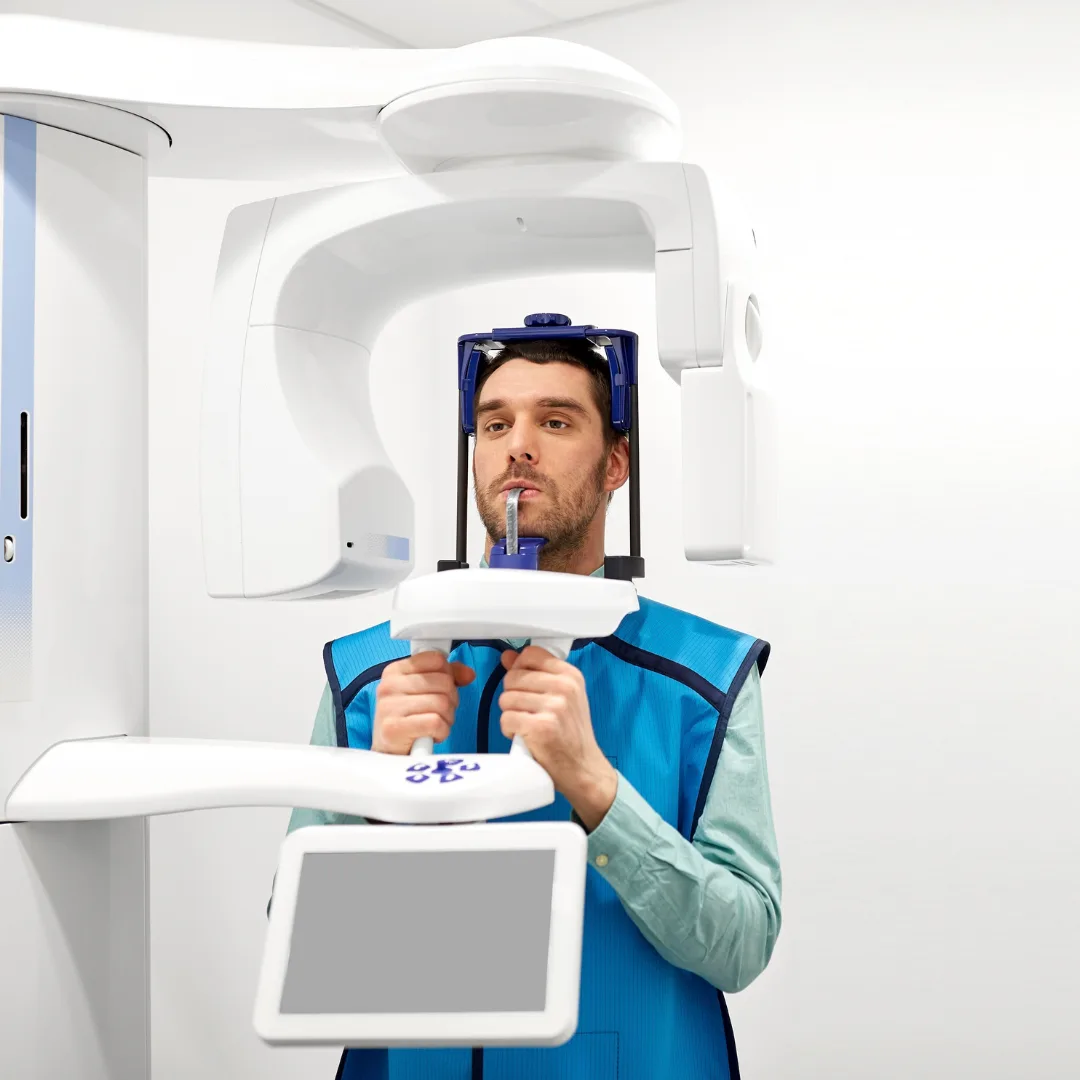
Positioning: We position your head on a rest, angle the X-ray sensor, and ask you to hold still for about one second.
Exposure: The X-ray passes through your teeth and is captured digitally. The sensor is very sensitive, so exposure time is minimal (0.1-0.2 seconds).
Protection: We use a lead apron to shield your body and a thyroid collar to shield your neck—the most radiosensitive area.
Instant Review: The X-ray image appears on our screen immediately, and we discuss findings with you during your appointment.
What Digital X-Rays Can Reveal
- Cavities: Early decay between teeth or under existing fillings
- Bone Loss: Recession from gum disease or aging
- Root Infections: Abscesses or failed root canals needing retreatment
- Impacted Teeth: Wisdom teeth or other teeth stuck under bone or gum
- Fractures: Cracks or breaks in teeth
- Cysts and Tumors: Abnormal growths in bone
- Dental Anomalies: Extra teeth, missing teeth, supernumerary teeth
- Implant Planning: Bone density and dimensions for implant placement
- Periodontal Disease: Severity and progression of gum disease
Radiation Safety at Thrive Dental
We take radiation protection seriously:
- Modern equipment: Our digital sensors require minimal exposure time
- Protective shielding: Lead aprons and thyroid collars for all X-rays
- Selective use: We take X-rays based on clinical need, not routine
- Digital processing: Enhanced images require less radiation than film to achieve diagnostic quality
- Transparent communication: We discuss findings and explain why X-rays are necessary
X-Ray Frequency: How Often Do You Need Them?
New Patients: A full mouth series establishes a baseline for comparison in future years.
Low-Risk Patients: Those with excellent home care, healthy gums, and no decay history typically need bitewings annually or every two years.
High-Risk Patients: Those with gum disease, multiple cavities, or heavy plaque accumulation may need X-rays every 6-12 months.
Symptomatic Patients: If you report pain, we take focused X-rays to diagnose the problem.
Your Thrive Dental dentist individualizes X-ray frequency to your specific needs and risk factors.
Special Situations
Pregnancy: Routine X-rays are postponed until after pregnancy. Emergency X-rays (for pain or infection) can be taken with full shielding if necessary.
Children: We take X-rays less frequently in children because their teeth erupt rapidly. Bitewings are typically taken every 1-2 years; full mouth series less often.
Braces and Implants: Metal orthodontics or implants can create artifacts on X-rays that make interpretation difficult. We discuss these limitations.
Schedule Digital X-Rays at Thrive Dental
At any of our five Northern California locations—Dixon, Elk Grove, Yuba City, Stockton, or Santa Clara—we combine digital X-rays with thorough clinical examination and patient education to deliver complete, proactive diagnosis. Early detection of problems means simpler, more affordable treatment and healthier teeth for life.
Your Digital X-Rays Support Complete Dental Care
Digital X-rays are most effective when paired with comprehensive preventive care: professional cleanings remove tartar, fluoride treatment prevents decay, and oral cancer screening protects your health. If decay is detected, we can restore your tooth with tooth-colored fillings. Ready to schedule your digital X-rays? Book your appointment today.

Frequently Asked Questions
Yes, absolutely. Digital X-rays expose you to approximately 90% less radiation than traditional film X-rays, according to the American Dental Association. Thrive Dental uses protective lead aprons and thyroid collars for additional safety. Your annual dental radiation exposure is far below safe thresholds established by health agencies.
New patients at Thrive Dental typically need a full mouth series (14-20 individual X-rays) to establish a baseline. Established patients usually need bitewings (between-teeth X-rays) annually. Your dentist may recommend additional X-rays if you have gum disease, decay risk, or if an area needs evaluation.
X-rays reveal problems too small or hidden to see during an exam: cavities developing between teeth, bone loss from gum disease that hasn't caused symptoms yet, infections under existing crowns, impacted teeth, and other issues. Early detection prevents major problems and costly treatment later.
Bitewings show the crowns of teeth and detect cavities. Periapical X-rays show an entire tooth from crown to root tip, revealing root infections and bone loss. Panoramic X-rays show all teeth and jaw structure. 3D cone beam CT imaging provides detailed information for implant planning and complex cases.
Emergency X-rays with shielding are safe during pregnancy. Routine X-rays are typically postponed until after pregnancy. Tell your Thrive Dental dentist if you're pregnant or think you might be.
Yes. Digital X-rays appear on a screen immediately, and we explain what we see during your appointment. We also provide a copy for your records or to share with another dentist.
Digital X-rays detect cavities between teeth, under existing fillings, bone loss from gum disease, root infections requiring root canal therapy, impacted wisdom teeth, jaw fractures, cysts, abscesses, and bone tumors. They guide treatment planning and help us catch problems early.
Related Services
Professional Teeth Cleanings
Professional cleanings at Thrive Dental remove plaque and tartar that brushing alone cannot, preventing cavities and gum disease.
Dental Fillings
Tooth-colored composite fillings at Thrive Dental restore cavities with natural-looking results that blend seamlessly with your teeth.
Oral Cancer Screening
Oral cancer screening at Thrive Dental is a simple, crucial part of preventive care that detects cancer early when survival rates are highest.
Get Digital X-Rays Near You
Ready for Digital X-Rays?
Schedule your appointment at any of our five Northern California locations. Our team is here to help you achieve the smile you deserve.