
Root Canal Treatment
Root canal treatment at Thrive Dental saves infected teeth using modern, comfortable techniques that eliminate pain and preserve your natural tooth.
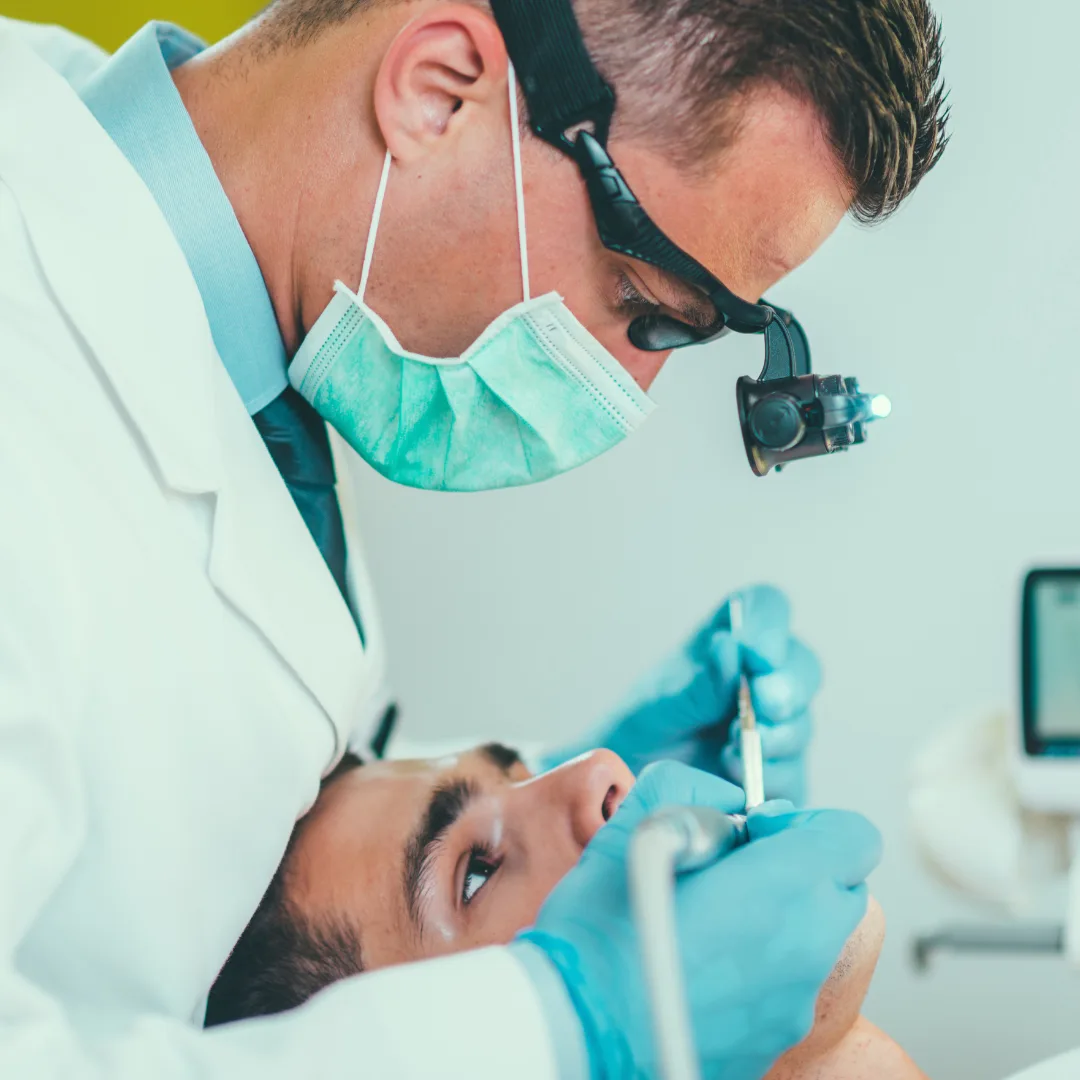
Root Canal Therapy: Saving Your Natural Tooth
Root canal therapy has a bad reputation—but it actually relieves pain and saves your natural tooth. When the nerve (pulp) inside your tooth becomes infected or damaged, a root canal eliminates the infection, stops the pain, and allows you to keep your tooth instead of extracting it.
At Thrive Dental, we use modern techniques and advanced technology to make root canal treatment gentle, efficient, and effective.
Why a Tooth Needs Root Canal Treatment
The pulp is living tissue inside your tooth containing blood vessels and nerves. When the pulp becomes infected or inflamed, it causes pain and must be removed. This happens when:
- Deep Decay: Bacteria penetrate through enamel and dentin, reaching the pulp
- Repeated Dental Work: Multiple fillings or restorations on the same tooth stress the pulp
- Trauma or Crack: A blow to the tooth or a crack allows bacteria to enter
- Gum Disease: Severe periodontal disease can expose the root and infect the pulp
- Aggressive Brushing: Over time, gum recession and aggressive brushing can expose the root
Without treatment, the infection spreads to the bone, causing an abscess. The tooth becomes increasingly painful and mobile, eventually requiring extraction.
The Root Canal Treatment Process
Assessment: We take digital X-rays to evaluate the shape of the root canals and confirm infection. We discuss the procedure and what to expect.
Anesthesia: We apply topical numbing gel, then inject local anesthetic around the tooth. The area is completely numb within 3-5 minutes.
Isolation: We place a rubber dam (a thin rubber sheet) around the tooth to isolate it from saliva and keep the area dry. This also protects the rest of your mouth.
Access: We create an opening in the top of the tooth to access the pulp chamber inside.
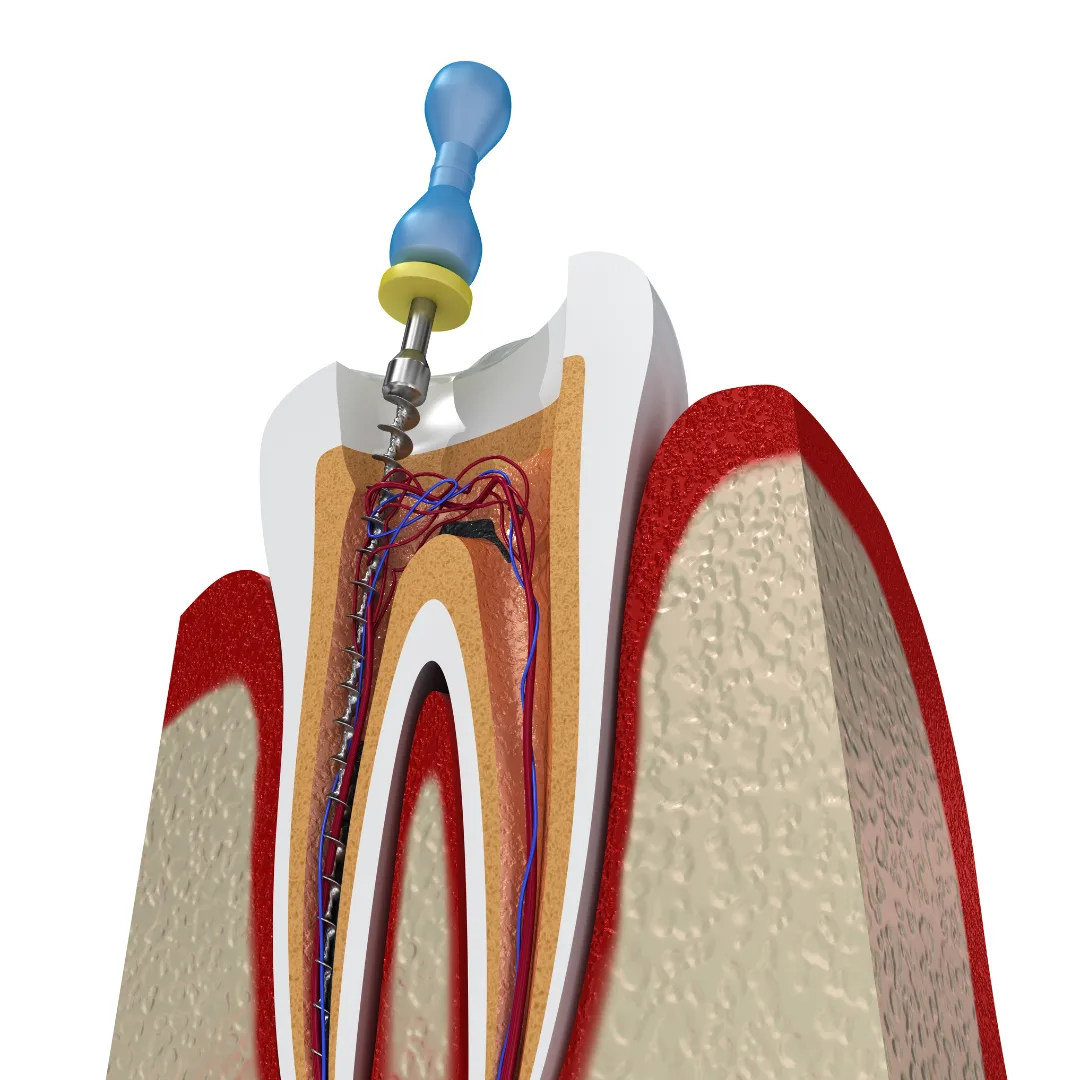
Pulp Removal: Using specialized instruments called files, we carefully remove the infected or damaged nerve tissue from inside the tooth. Files are progressively larger, working from the center outward.
Cleaning and Shaping: We clean the inside of the root canals, removing bacteria and infected tissue. We shape the canals to accept the filling material. We rinse with antimicrobial solution and dry the canals thoroughly.
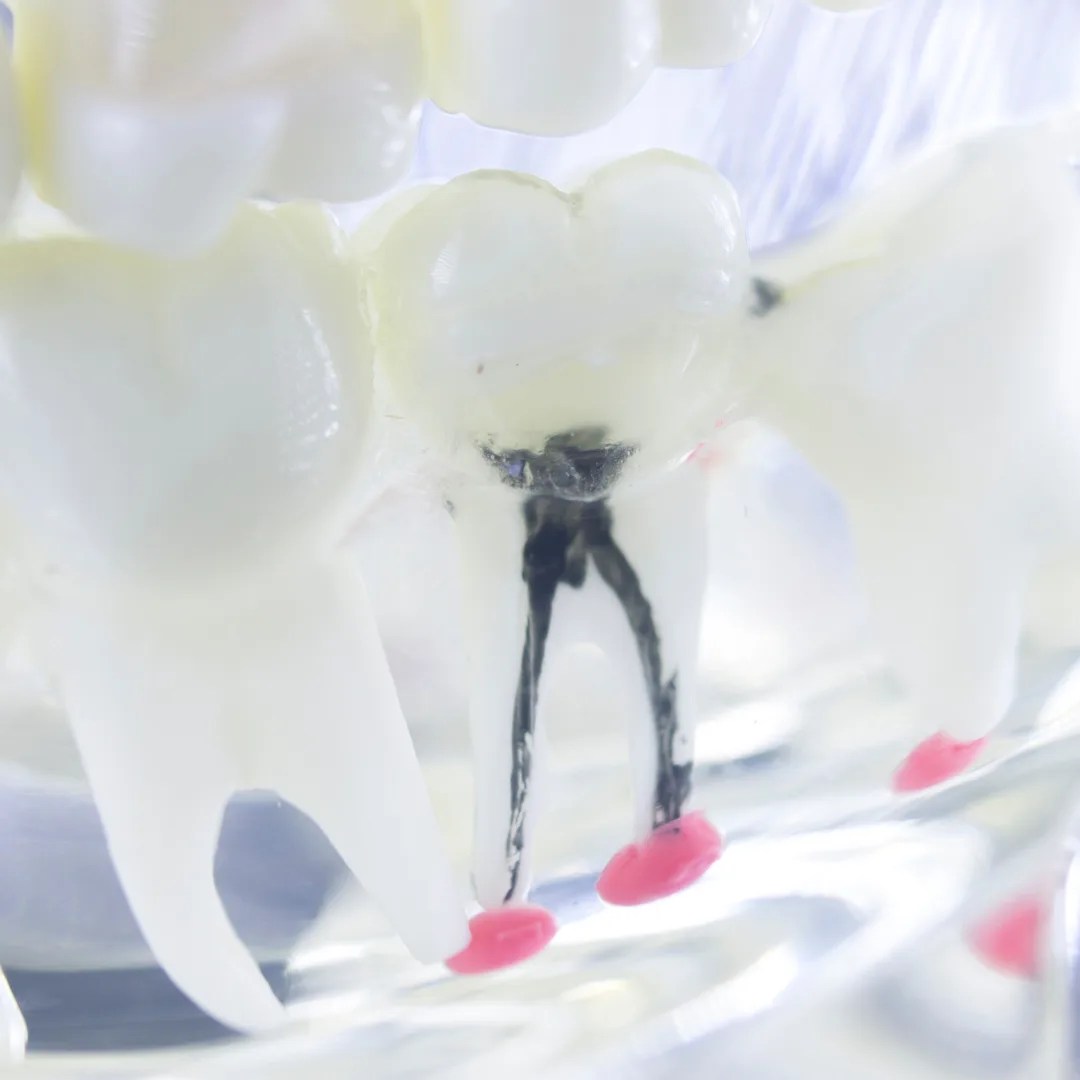
Filling: We fill the cleaned canals with gutta-percha (a biocompatible rubber-like material) and sealer cement. This seals the canals completely, preventing future infection. We confirm the fill with an X-ray.
Restoration: We fill the access opening with composite resin or place a temporary filling. Most root canal treated teeth eventually need a crown to protect them and restore full function.
What to Expect During Treatment
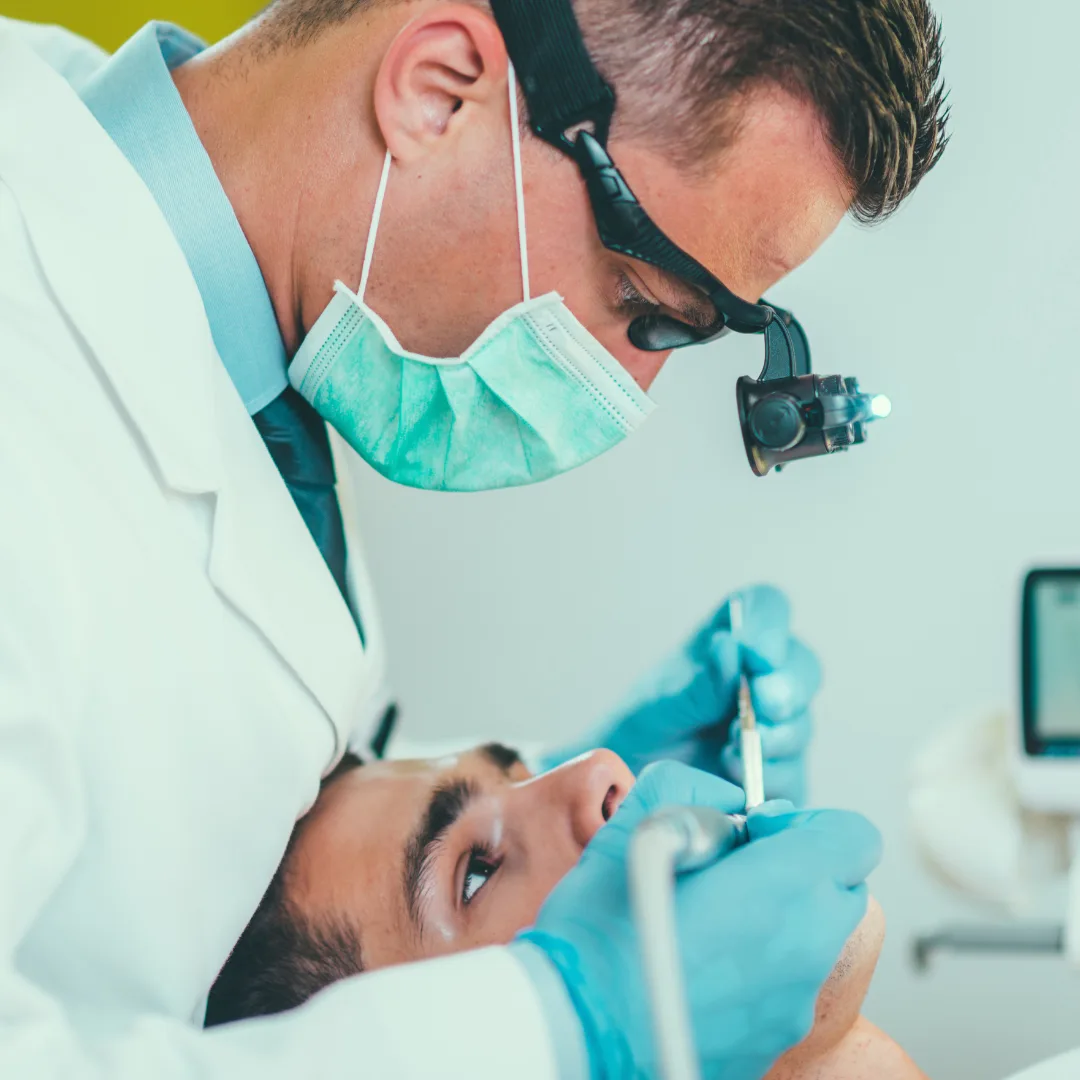
Most patients are surprised that root canal treatment is no more uncomfortable than having a filling placed. You’ll recline in our comfortable chair at your Thrive Dental location while our dentist works carefully. You’ll hear the sound of the files working, feel gentle pressure, and hear water running as we rinse and dry the canals. There is no pain—only sensations of pressure and vibration.
The entire procedure takes 90 minutes to two hours. Complex teeth with multiple roots or curved canals may require two appointments.
After Root Canal Treatment
Immediate Aftercare:
- The tooth may feel tender to bite on for several days. This is normal.
- Avoid chewing on that side for 24 hours.
- Take over-the-counter pain reliever (ibuprofen or acetaminophen) as needed for discomfort.
- The tooth is fragile until it receives its permanent restoration (crown), so avoid sticky or hard foods.
Permanent Restoration:
A tooth that has had root canal treatment is more brittle without its nerve, so it needs a crown. Schedule your crown appointment within 2-4 weeks. The crown protects the tooth from fracture and restores it to full strength and function.
Long-Term Care:
With a crown and good oral hygiene, a root canal treated tooth can last a lifetime. Continue brushing twice daily, flossing daily, and visiting Thrive Dental for professional cleanings every six months.
Success Rate and When Retreatment Is Needed
Root canal therapy has a high success rate when performed with modern techniques. At Thrive Dental, we use modern techniques—digital imaging, electronic apex locators, nickel-titanium files, and rotary instruments—to ensure thorough treatment.
Occasionally, a root canal treated tooth may become reinfected due to:
- Breakdown of the restoration or crown
- Leakage around the sealing material
- A previously missed canal
- New decay or trauma
If your root canal treated tooth becomes painful or shows signs of reinfection, we can perform retreatment (removing the old filling, cleaning the canals again, and refilling). Retreatment has a similar success rate to initial treatment.
Why Choose Root Canal Treatment at Thrive Dental
We make root canal therapy as comfortable as possible. Modern anesthesia and gentle technique mean most patients feel no pain—only pressure and vibration. We use advanced digital imaging to visualize every canal precisely and electronic locators to confirm complete treatment. Most importantly, we make it clear that a root canal relieves pain; it doesn’t cause it. If you’re experiencing severe tooth pain, root canal therapy is relief, not punishment.
Why Save the Tooth?
Extracting a tooth and replacing it with an implant, bridge, or denture is more costly, time-consuming, and invasive than root canal treatment. Root canal therapy saves your natural tooth, which is always the best option when possible.
If you’re experiencing severe tooth pain, sensitivity to temperature, or swelling, contact Thrive Dental immediately. Root canal treatment can relieve your pain and save your smile.
Complementary Treatments for Your Restoration
After root canal treatment, your tooth typically needs a crown to protect it and restore full strength. Learn more about other treatment options like dental implants if tooth extraction becomes necessary. Visit any of our five Northern California offices or schedule your appointment online.
Frequently Asked Questions
No. A root canal relieves pain from an infected tooth. We numb the area completely with local anesthetic before we begin, so most patients feel no pain during treatment--only gentle pressure and vibration. Modern techniques at Thrive Dental make the procedure as comfortable as having a filling placed.
When the nerve inside your tooth (the pulp) becomes infected or severely damaged by deep decay, trauma, or repeated dental work, it causes pain and must be removed. A root canal eliminates the infection while preserving the tooth. Without treatment, the infection spreads to bone and the tooth must be extracted.
Deep decay, repeated fillings, large composite restorations, cracked or chipped teeth, trauma or impact, or even aggressive brushing can damage the nerve inside a tooth. Sometimes there's no obvious cause.
We numb the tooth and place a rubber dam to isolate it. We access the pulp chamber, remove the infected nerve tissue, clean and shape the inside of the root canals using specialized instruments, and fill the canals with gutta-percha (a biocompatible rubber-like material) and sealer cement.
Yes. Although the nerve is removed, the tooth remains vital and functional. However, root canal treated teeth become slightly more brittle over time, so we typically recommend a crown to protect the tooth and restore it to full strength and function.
Most root canals are completed in one 90-minute to two-hour appointment. Teeth with multiple roots or complex anatomy may require two visits. We evaluate complexity before starting.
Root canal therapy has a high success rate when performed with modern techniques. At Thrive Dental, we use digital imaging, electronic apex locators, and modern files to ensure thorough treatment.
Some mild discomfort is normal for 3-5 days after root canal treatment. The tooth may feel tender to bite on. Take over-the-counter pain reliever as needed. Avoid chewing on that side until the tooth is crowned.
Related Services
Emergency Dentistry
Emergency dental care at Thrive Dental provides same-day relief for severe pain, broken teeth, and dental trauma.
Tooth Extractions
Tooth extraction at Thrive Dental is performed only when a tooth cannot be saved, with full emphasis on comfort and aftercare.
Dental Fillings
Tooth-colored composite fillings at Thrive Dental restore cavities with natural-looking results that blend seamlessly with your teeth.
Get Root Canal Treatment Near You
Ready for Root Canal Treatment?
Schedule your appointment at any of our five Northern California locations. Our team is here to help you achieve the smile you deserve.