
Dental Crowns and Bridges
Precision-engineered crowns and bridges that restore damaged teeth and close gaps--durable restorations lasting 10-15+ years.
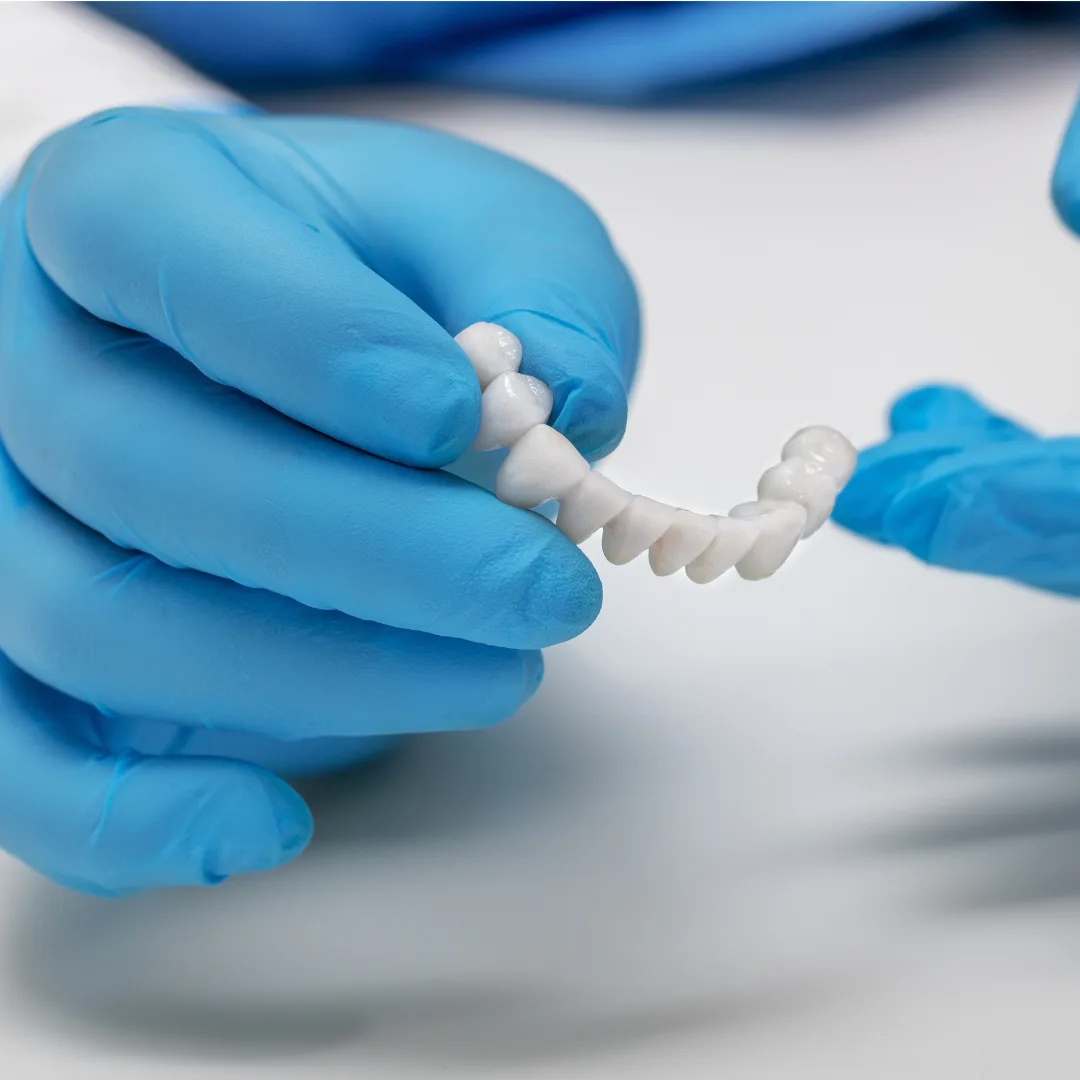
Restore Damaged Teeth Without Extraction
A dental crown is a custom-engineered restoration that encases your damaged or weakened tooth, returning it to full strength, natural appearance, and comfortable function. Unlike removing the tooth, crowning it preserves your natural root structure and jawbone, which is critical for long-term oral health.
At Thrive Dental across our Northern California locations, we use precision digital impressions and work with our trusted laboratory partners to fabricate crowns that match your natural teeth in shade, translucency, and contour. Whether your tooth is severely decayed, cracked from trauma, compromised by an old filling, or needs protection after root canal therapy, a crown is a predictable, long-lasting solution.
How Crowns Restore Your Smile: The Complete Process
Appointment 1 (Preparation & Impression): After local anesthesia numbs the tooth and surrounding tissue, we carefully prepare the tooth by removing outer structure while preserving the healthy core. This creates the right shape and size for your crown. We then take a precise digital impression (no gag-inducing putty) that captures every detail. You leave with a protective temporary crown that lets you eat and function normally while your permanent crown is fabricated.
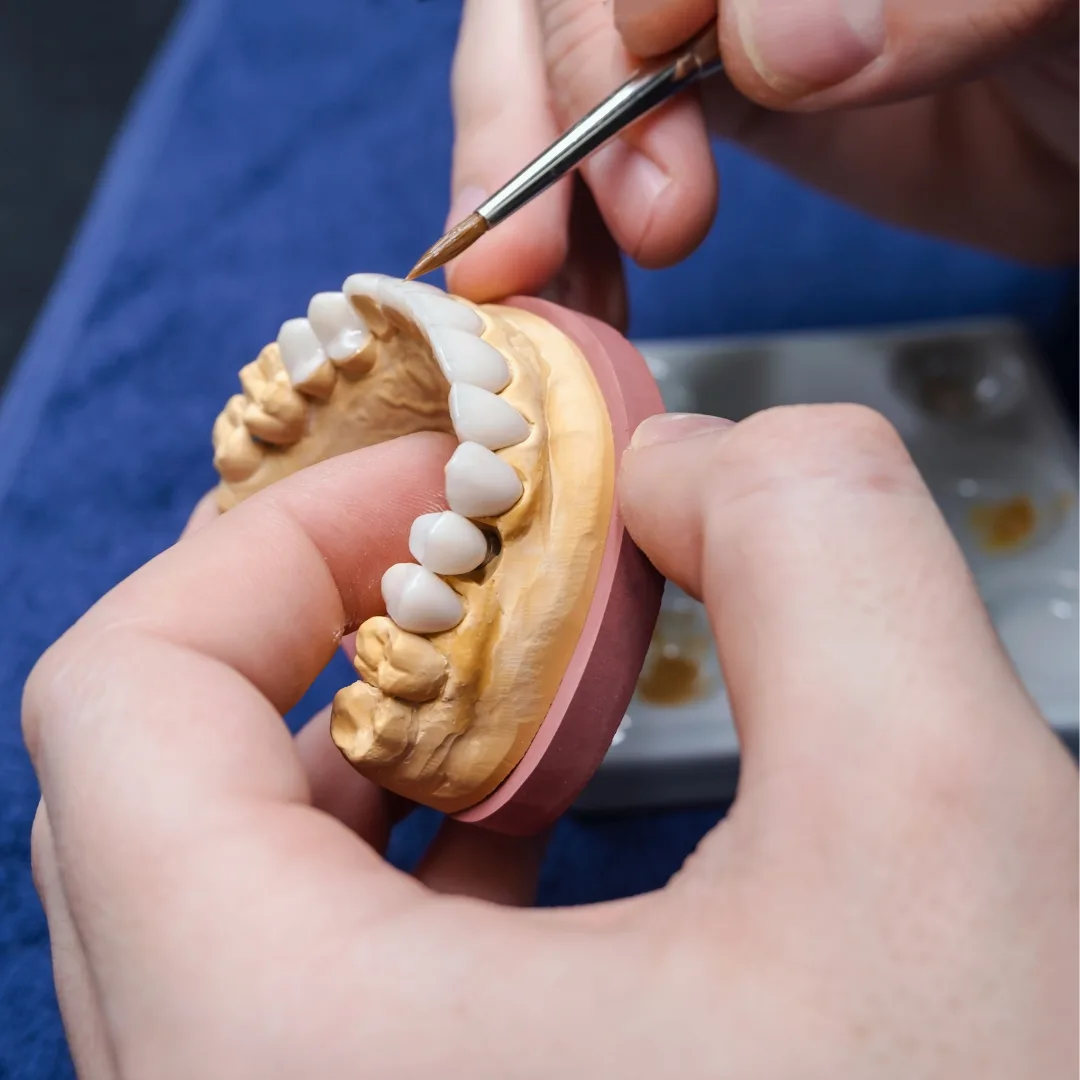
Laboratory Phase (1-2 weeks): Your impression goes to our laboratory partner, where a trained technician hand-crafts your crown to exact specifications. This includes matching your natural tooth color, shape, and translucency—especially important for front teeth where aesthetics matter most.
Appointment 2 (Delivery & Cementation): We remove your temporary crown and try in the permanent one. We check the fit, adjust the bite so your teeth meet evenly, verify the shade matches your other teeth, and confirm you’re comfortable with the result. Once you approve it, we apply biocompatible permanent cement and remove any excess. You leave with a fully restored tooth.
Which Crown Material Is Right for You?
All-Porcelain/Ceramic Crowns
- Appearance: Most natural-looking, excellent light transmission
- Strength: Very strong, excellent for front teeth and less-demanding back teeth
- Best for: Smile visibility, patients who want maximum aesthetics
Zirconia Crowns
- Appearance: Slightly less translucent than porcelain, still very natural
- Strength: Extremely durable, resists chipping, ideal for heavy chewers
- Best for: Back teeth, patients with strong bite forces
Porcelain-Fused-to-Metal (PFM)
- Appearance: Natural but slightly less translucent (metal base shows sometimes)
- Strength: Extremely strong, proven durability
- Best for: Back molars, patients prioritizing durability and strength
Dental Bridges: Closing Gaps Without Implant Surgery
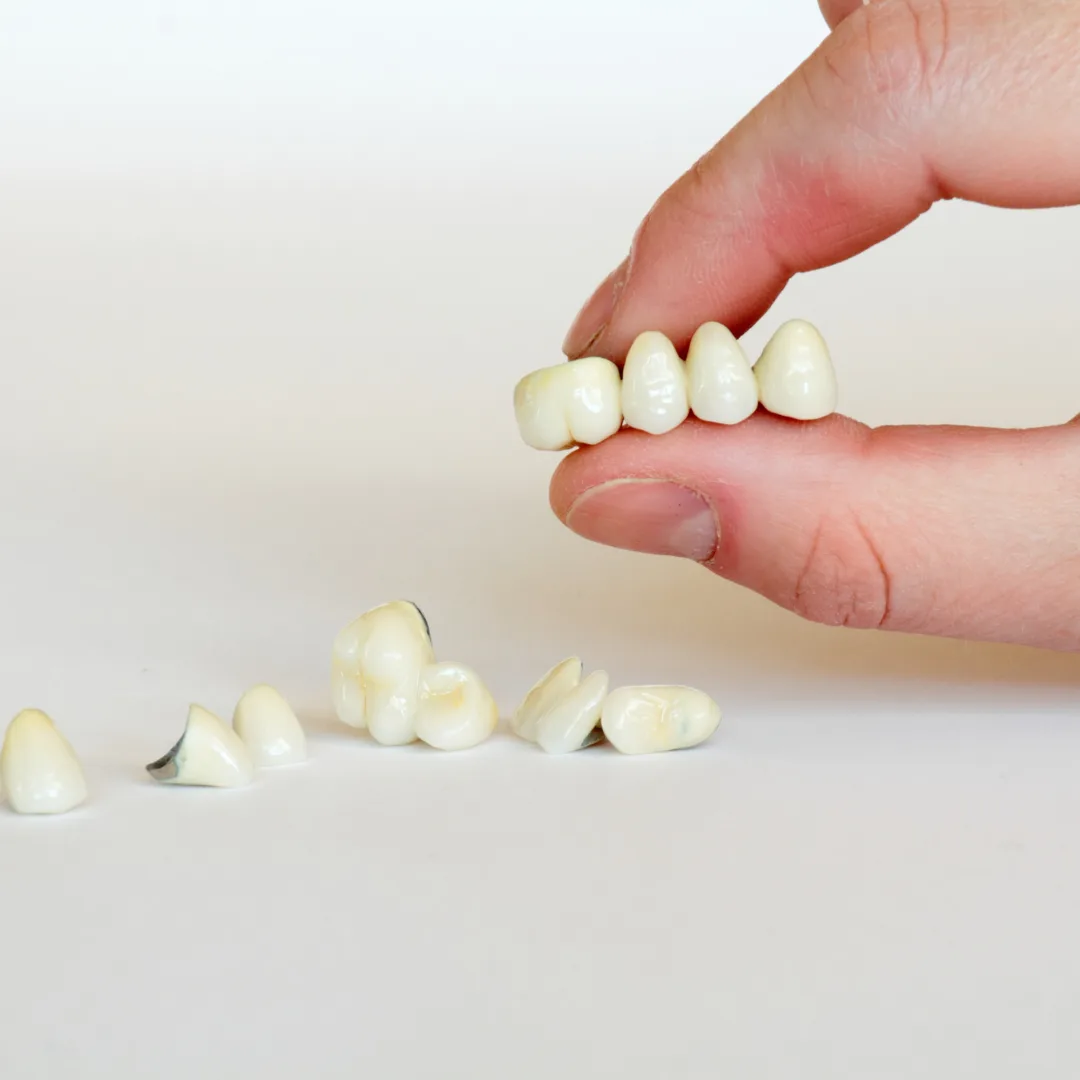
A bridge anchors replacement teeth to your adjacent natural teeth via crowns, effectively “bridging” the gap left by one or more missing teeth. Bridges are a good option when:
- You’re missing 1-3 teeth in a row
- The adjacent teeth need crowning anyway (decay, filling, restoration)
- You prefer not to have implant surgery
- You have strong, healthy teeth flanking the gap
Bridge Process: We prepare and crown the adjacent teeth (the “abutments”), then attach replacement teeth to those crowns. The result is a single, fixed unit that feels and functions like natural teeth. You cannot remove it—it’s cemented permanently.
Bridge Candidacy: Your adjacent teeth must be healthy enough to support the bridge. If they’re already compromised, the risk of anchor tooth failure increases. This is why implants are often preferred for single tooth replacement: they don’t depend on adjacent teeth and preserve them.
Crown Longevity and Long-Term Success
Crowns are one of dentistry’s most successful restorations. Studies show 90%+ crown survival at 10 years when properly placed and maintained. Factors affecting longevity:
- Material choice: Zirconia and all-porcelain are more durable than metal-based crowns in long-term studies
- Oral hygiene: Flossing daily and brushing twice prevents decay at the crown margin
- Bite forces: Grinding or clenching accelerates wear; a night guard helps
- Tooth structure underneath: A crown is only as good as the tooth supporting it
- Cementing quality: Biocompatible, properly applied cement prevents microleakage
Crown treatment is a significant investment. We offer flexible financing through Cherry, CareCredit, and Sunbit to make your restoration affordable.
Why Choose Thrive Dental for Your Crown or Bridge
We combine precision digital impressions with meticulous shade-matching to create crowns that are indistinguishable from your natural teeth. Our partnerships with elite laboratories and commitment to exacting specifications ensure every crown is hand-crafted to perfection. We use advanced CBCT imaging when needed for implant planning and complex cases. Your restoration is informed by precise digital planning and executed with attention to every detail—from material selection to final cementation to long-term monitoring.
Ready to restore your damaged tooth? Schedule a consultation today. We’ll examine your tooth, discuss material options, and answer any questions before you commit to treatment.
Explore Other Restoration Options
For single missing teeth, dental implants offer superior longevity and bone preservation. For multiple missing teeth, consider All-on-4 implants, implant-supported dentures, or complete dentures. For underlying dental concerns, explore root canal therapy to save diseased teeth. Visit any of our five Northern California locations or schedule your appointment today.
Frequently Asked Questions
A crown is a tooth-shaped restoration that covers your entire tooth above the gum line. You need one when a tooth is so decayed, cracked, or weakened that a filling won't restore it. Crowns are also placed after root canal therapy to protect the treated tooth. If a tooth is chipped or has a very large old filling that's failing, a crown restores it to full function and appearance.
A crown covers a single tooth that still has its root. A bridge replaces one or more missing teeth by anchoring to adjacent teeth via crowns. For example, if you're missing tooth #7, we place crowns on teeth #6 and #8, and attach replacement teeth to those crowns to 'bridge' the gap. Bridges require healthy adjacent teeth and more tooth structure loss. Implants are often preferred for single tooth replacement.
We offer three main options: all-porcelain (most natural appearance, excellent durability, ideal for front teeth), zirconia (extremely strong, slightly less natural-looking, ideal for back teeth), and porcelain-fused-to-metal (durable hybrid, used when strength is critical). We recommend materials based on tooth location, bite force, and aesthetic goals.
First appointment: we numb the tooth, prepare it by removing outer structure to create space for the crown, take precise impressions, and place a temporary crown for protection and comfort. We send impressions to our laboratory. Second appointment (1-2 weeks later): we remove the temporary, verify the permanent crown fits perfectly, adjust bite and color, then cement it permanently.
No pain during the procedure--we use local anesthesia. After numbing wears off, mild sensitivity to temperature is normal for a few days. Over-the-counter pain relief helps if needed. Sensitivity subsides within a week. If it persists, contact us--the bite may need adjustment or the temporary may have a small gap.
High-quality crowns typically last 10-15 years, with many lasting 20+ years. Longevity depends on the material chosen, how well you care for them, your bite forces, and whether you grind your teeth. Bridges last similarly but depend on the health of anchor teeth. Regular check-ups help us identify any problems early.
Treat your crown like a natural tooth: brush twice daily, floss daily, and avoid chewing on hard objects (ice, hard candy, pens). If you grind your teeth, wear a night guard to prevent fracture. Regular dental cleanings and check-ups are essential. Avoid extremely hot or cold foods if you have temporary sensitivity.
If a crown chips or fractures, we can often repair or replace it. If a crown feels loose, call immediately--we can re-cement it. Don't wait, as a loose crown can allow bacteria under it, causing decay of the underlying tooth. If a bridge anchor tooth develops problems, the entire bridge may need replacement.
Related Services
Dental Implants
Straumann dental implants offer permanent tooth replacement with high clinical success rates--the closest restoration to natural teeth.
Custom Dentures
Modern custom dentures restore function and appearance when teeth are lost. Full and partial options available--plus implant-supported upgrades.
Get Dental Crowns and Bridges Near You
Ready for Dental Crowns and Bridges?
Schedule your appointment at any of our five Northern California locations. Our team is here to help you achieve the smile you deserve.